
Introduction
For wholesalers and toy brands selling compatible bricks, building block compatibility testing is not optional. If bricks do not connect securely with major building block systems, customers will return products, leave negative reviews, and lose trust in the brand.
This guide explains how to test compatibility before mass production, which measurements matter most, and how to structure a sample-approval process with your supplier.
What Compatibility Really Means
Compatibility does not only mean that two bricks can physically connect. A truly compatible building block should:
- Connect firmly with major-brand bricks
- Separate easily enough for children to use
- Maintain consistent clutch force after repeated assembly
- Align correctly in height, width, and stud position
- Work with plates, baseplates, slopes, wheels, and specialty parts
- Remain stable after transport, temperature changes, and repeated play
Lione Toys notes that compatible building blocks should fit seamlessly with major brands, making sample verification essential for wholesale buyers.lionetoys+1
Tests to Conduct Before Mass Production
1. Visual and dimensional inspection
Start by comparing the sample with reference bricks from the major systems you want to support.
Check:
- Stud diameter and spacing
- Brick height and width
- Wall thickness
- Mold alignment
- Surface finish
- Color consistency
- Presence of flash, burrs, or warping
Use calipers or a measuring fixture for critical dimensions. Small deviations can create loose connections or excessive tightness.
2. Clutch force testing
Clutch force is the most important compatibility indicator. A brick should hold firmly when connected but separate without excessive force.
Test method:
- Connect the sample brick to a reference brick.
- Pull the bricks apart using consistent force.
- Record the force required for separation.
- Repeat at least 20–50 times per sample.
- Compare results across different colors and production batches.
The acceptable range depends on the product category and target age group. For children’s products, the connection should be secure but not so tight that small hands cannot separate the bricks.
3. Repeated assembly test
Connect and disconnect the same pair of bricks repeatedly, for example 100, 300, or 500 cycles. Then measure whether clutch force decreases.
This test helps identify:
- Weak clutch ribs
- Excessive wear
- Poor material resilience
- Inconsistent mold quality
4. Cross-combination testing
Do not test only one brick type. Build a small test matrix using:
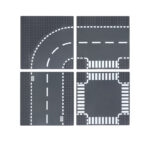
- Basic bricks with baseplates
- Bricks with plates
- Plates with tiles
- Slopes with standard bricks
- Wheels with chassis parts
- Windows and doors with wall bricks
- Technic-style parts with connectors
A product may work well in one combination but fail in another.
5. Build stability test
Assemble a representative model using your sample parts. Then check:
- Whether the model holds together during normal play
- Whether structures twist or collapse
- Whether layers align evenly
- Whether large builds remain stable
- Whether parts loosen after handling
This practical test reveals issues that individual piece testing may miss.
6. Drop and transport testing
Pack the sample in the intended retail packaging and conduct drop tests according to your market or customer requirements. Also simulate container transport by checking carton compression, pallet stacking, and vibration resistance.
Check whether bricks become loose, scratched, or deformed after transport.
7. Safety and compliance testing
Compatibility is commercial, but safety is non-negotiable. Confirm the required certifications for your destination market, such as EN71 for Europe or ASTM/CPC/CPSIA requirements for the United States.
Lione Toys states that its products can comply with international certification requirements including EN71, ASTM, CPC, CPSIA, and CE for different export markets.lionetoys
Sample Approval Process
A structured approval process reduces production risk.
- Send your reference requirements — target systems, brick types, colors, and packaging.
- Request a pre-production sample — not only a photo or video.
- Test compatibility — clutch force, repeated assembly, and cross-combination tests.
- Check safety documents — material declarations and destination-market certificates.
- Approve a golden sample — sign, date, and retain it as the production standard.
- Confirm inspection standards — define AQL levels and acceptable defect categories.
- Arrange inline and final inspection — verify color, dimensions, packaging, and carton condition.
- Retain sealed samples — keep samples from each shipment for future comparison.
Common Compatibility Problems
| Problem | Likely cause | Prevention |
|---|---|---|
| Bricks fall apart easily | Weak clutch ribs or incorrect dimensions | Tighten tolerance control and test clutch force |
| Bricks are too difficult to separate | Over-tight tolerance or excessive clutch force | Adjust mold or material formulation |
| Layers do not align | Height deviation or mold wear | Use calibrated measuring tools |
| Color varies between batches | Poor color management | Approve color standards and retain samples |
| Parts work alone but fail in models | Inconsistent tolerance across part types | Conduct cross-combination testing |
| Packaging arrives damaged | Weak carton or poor pallet plan | Conduct drop and compression tests |
What to Ask Your Supplier
Before placing a bulk order, ask:
- Can you provide physical samples for compatibility testing?
- Which major building block systems have you tested against?
- What is your acceptable clutch-force range?
- How do you control dimensional tolerance during production?
- Can you provide material and certification documents?
- What is your sampling and inspection process?
- Can you support third-party testing if required?
- Will the golden sample be retained for repeat orders?
FAQ
How many samples should I test?
Test samples from different colors, molds, and production batches. A minimum of 20–50 connection tests per key part type provides a more reliable indication than testing only one or two bricks.
Can compatible bricks be guaranteed to fit all major brands?
No responsible supplier should promise universal compatibility without testing. Always verify the specific systems and part combinations relevant to your product.
Does compatibility testing increase cost?
Testing adds a small upfront cost, but it reduces the much higher cost of returns, negative reviews, and rejected shipments.
Conclusion
Effective building block compatibility testing protects your brand, reduces returns, and ensures a better customer experience. Test clutch force, dimensional accuracy, repeated assembly, cross-combinations, packaging, and safety compliance before approving mass production.
Request compatible building block samples and a compatibility-testing checklist from Lione Toys. Visit www.lionetoys.com to start your OEM, ODM, or wholesale building block project.