When building or expanding an international toy brand, one of your most foundational strategic decisions is determining how your products will be engineered and manufactured.
The toy supply chain generally operates under two primary models: OEM (Original Equipment Manufacturing) and DM (Original Design Manufacturing).
Choosing the wrong path can either result in exorbitant development costs that drain your startup capital, or leave you with a generic product that is easily copied by competitors. Let’s break down the realities of OEM ODM toy manufacturing to identify the perfect match for your business model.
Understanding the Two Models
1. OEM (Original Equipment Manufacturing): The Custom Route
Under an OEM framework, you provide the factory with your own complete design blueprints, 3D CAD files, and material specifications. The manufacturer is responsible purely for executing your vision—creating the custom injection molds, sourcing components to your spec, and assembling the final product.
- Best Suited For: Brands with proprietary, unique MOC brick designs, patented STEM electronic kits, or exclusive IP (Intellectual Property) partnerships.
- The Advantage: Absolute product differentiation. You own the product design and the physical molds, making it incredibly difficult for competitors to replicate your offering.
- The Challenge: High upfront capital investment. Custom injection molds for complex toy sets can cost tens of thousands of dollars, paired with long development timelines (3-6 months).
2. ODM (Original Design Manufacturing): The Fast-Track Route
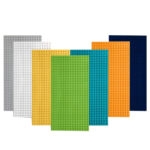
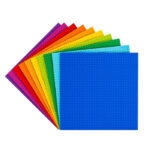
In the ODM model, the factory has already designed, engineered, and safety-certified the product. They own the molds and the tooling. As the buyer, you select an item from their existing catalog and customize it by adding your private label logo, custom colorways, and bespoke packaging graphics.
- Best Suited For: E-commerce startups, Amazon private-label sellers, and distributors looking to enter the magnetic tile or educational block market quickly with minimal risk.
- The Advantage: Speed to market and low overhead. Since the tooling already exists, upfront development costs are virtually zero, and Minimum Order Quantities (MOQs) are significantly lower.
- The Challenge: Limited product differentiation. Other brands can buy the exact same core toy from the same factory, turning your primary competition into a battle over marketing, packaging, and price.
Comparing OEM vs. ODM at a Glance
| Feature | OEM Model | ODM Model |
| Design Ownership | Importer (You) | Manufacturer (The Factory) |
| Upfront Tooling Cost | High (Custom Mold Expenses) | Zero to Minimal |
| Time to Market | Slow (6+ Months for Testing/Molds) | Fast (30-45 Days) |
| MOQ Requirements | Higher (To justify production runs) | Lower (Often utilizes existing components) |
| IP Protection Risk | High (Requires robust NDAs) | Low (Factory already owns the design) |
Managing Intellectual Property (IP) and Non-Disclosure
Regardless of which model you choose, IP protection is paramount in the competitive toy landscape.
If you pursue an OEM strategy, protect your designs before sending CAD drawings to potential suppliers:
- Execute an NNN Agreement: Go beyond a standard Western NDA. Use a Chinese-law governed Non-Disclosure, Non-Circumvention, and Non-Evatuation (NNN) Agreement. This legally bars the factory from using your custom designs to supply other buyers or launching their own competing brand.
- Clarify Mold Ownership: Ensure your contract explicitly states that you own the physical injection molds, and that they cannot be transferred or used for any production runs without your explicit written authorization.
Conclusion
There is no single “correct” manufacturing model. If you have a groundbreaking, proprietary design and the capital to support custom molds, OEM secures your long-term competitive moat. If you want to validate market demand for a product line like magnetic tiles with speed and efficiency, ODM provides the perfect low-risk springboard.