One of the most common questions from toy wholesalers, importers, and private-label brands is simple:
Can you customize compatible building blocks?
The answer is yes—but with important distinctions.
You can customize colors, parts mix, packaging, branding, instruction manuals, and even create new molded components while maintaining compatibility with major building block systems. However, customization must be managed carefully to ensure that parts still connect reliably, meet safety requirements, and respect intellectual property.
This guide explains what can be customized in compatible building blocks, how to balance compatibility with differentiation, and what options are available for buyers who want custom bricks and parts without losing the commercial benefits of a compatible system.
What Does “Compatible” Mean in This Context?
Before discussing customization, it is important to clarify what “compatible” means.
Compatible building blocks are bricks and components designed to connect securely with major-brand systems. Compatibility depends on:
- Stud dimensions and spacing
- Brick overall dimensions
- Tube-and-stud connection geometry
- Clutch power (connection strength)
- Tolerances and mold precision
- Material behavior and shrinkage
When buyers ask whether they can customize compatible building blocks, they usually mean:
Can I create my own colors, parts mix, packaging, and even new shapes while still ensuring the bricks work with the systems my customers already own?
The answer depends on what you customize and how you manage the engineering.
What Can You Customize in Compatible Building Blocks?
There are multiple levels of customization, from simple branding to fully new molded components.
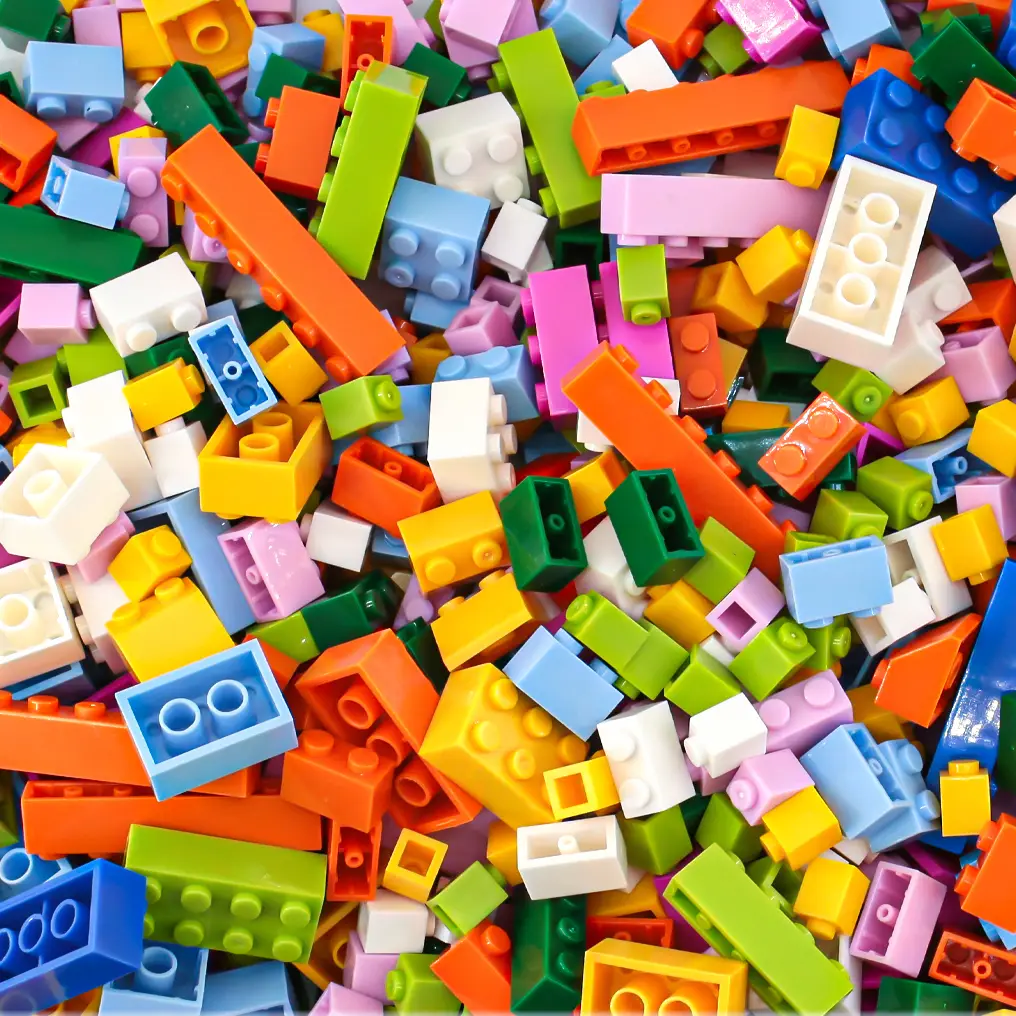
1. Color Customization
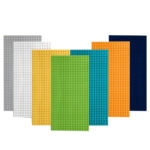
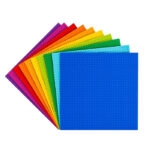
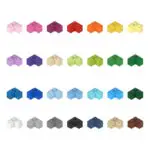
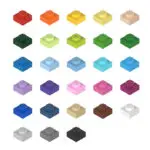
Color is the easiest and most cost-effective way to customize compatible building blocks.
You can:
- Choose from standard color palettes
- Request custom color matching (for example, brand colors or special shades)
- Define color ratios for different parts (for example, more blue and grey for a city theme)
- Create special colors for limited editions or seasonal products
- Use color coding for educational or sorting purposes
Color customization does not affect mechanical compatibility as long as the plastic material and molding parameters remain consistent. A good manufacturer will control color masterbatch, dosing, and batch-to-batch consistency to ensure that custom colors do not compromise brick quality.
2. Parts Mix and Assortment
You can customize which parts are included in your product without changing the parts themselves.
Options include:
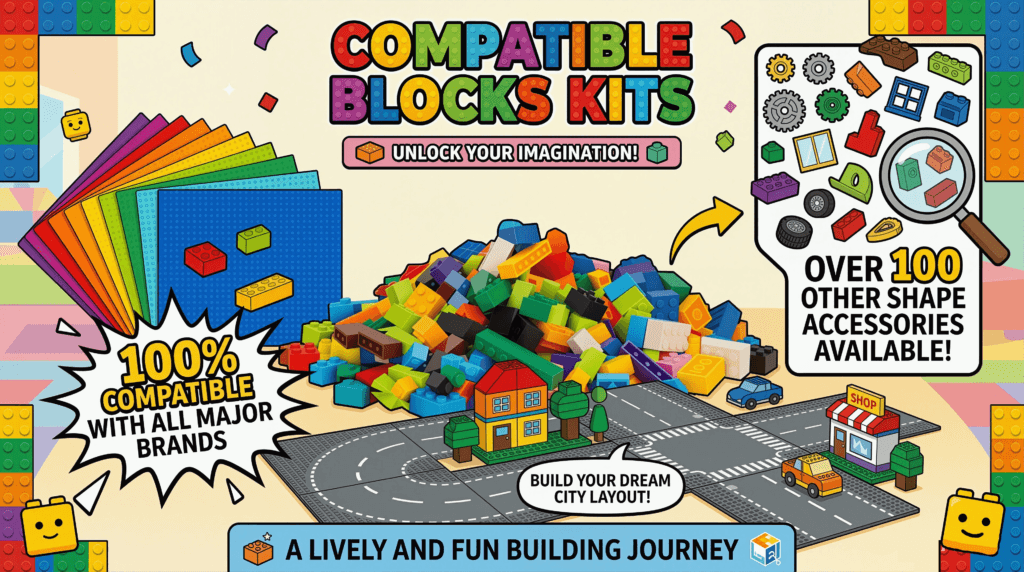
- Selecting specific brick shapes (1×2, 2×4, plates, slopes, tiles, etc.)
- Choosing specialty parts (windows, doors, wheels, arches, etc.)
- Creating themed assortments (city, castle, vehicle, space, STEM, etc.)
- Defining parts ratios for different price points or age groups
- Building replacement-part packs focused on high-demand components
Parts mix customization uses existing molds and components. It allows you to create differentiated products—such as a “City Builder Kit” or a “STEM Mechanics Pack”—while maintaining full compatibility with major systems.
3. Packaging Customization
Packaging is a major area for customization and branding.
You can customize:
- Packaging format (bulk bag, color box, tub, bucket, display box, etc.)
- Artwork and graphic design
- Logo placement and brand identity
- Product name and description
- Age grading and safety warnings
- Barcode, SKU, and importer information
- Multilingual text for different markets
- Internal organization (inner bags, trays, dividers, instruction placement)
Packaging customization does not affect brick compatibility but significantly impacts shelf presence, online listing quality, perceived value, and customer experience.
4. Logo and Branding
You can apply your brand identity to compatible building blocks in several ways:
- Printed logo on packaging
- Embossed or debossed logo on storage tubs or buckets
- Custom hang tags, labels, and seals
- Branded instruction manuals and activity guides
- Custom sticker sheets (where appropriate and compliant)
- Printed logo on select bricks or tiles, if designed and produced correctly
Branding helps customers recognize your product and builds long-term brand value. It also makes it harder for competitors to copy your exact offering, even if they use similar compatible components.
5. Instruction Manuals and Activity Guides
Custom instructions and activity content can turn a generic parts assortment into a structured product.
You can customize:
- Step-by-step building instructions for specific models
- Multiple model options from the same parts
- Creative building challenges (for example, “build the tallest tower”)
- STEM activities (for example, “design a bridge that holds weight”)
- Educational content about shapes, symmetry, or engineering concepts
- Classroom activity ideas for teachers and programs
Well-designed instructions improve the building experience, reduce customer questions, and support repeat purchases. They also allow you to position compatible bricks as educational or STEM-oriented products.
6. Custom Sets Using Existing Parts
A custom set is a complete product that uses existing compatible components but with a unique parts list, color mix, packaging, and instructions.
This is one of the most practical ways to create differentiated products without new molds.
Examples include:
- A branded city-building set with custom color ratios and packaging
- A castle construction kit using existing slopes, arches, and windows
- A vehicle creator pack with wheels, axles, and chassis bricks
- An educational STEM kit with beams, gears, pins, and connectors
- A replacement-parts pack focused on high-demand standard bricks
Custom sets allow you to offer unique products while maintaining full compatibility and controlling development cost.
7. Custom Bricks and New Molded Components
For buyers who want truly exclusive products, custom bricks and new molded components are the next level.
This involves:
- Designing new brick shapes or specialty parts
- Creating exclusive components for a specific theme or function
- Developing parts that are not available in standard catalogs
- Integrating new molds with existing compatible systems
Custom molds allow you to create signature elements that competitors cannot easily copy. However, they require:
- Careful design to maintain compatibility
- Investment in tooling and prototyping
- Testing to ensure connection quality and safety
- Clear agreements on mold ownership and exclusivity
When done correctly, custom components can become a key differentiator for your brand while still working with major building block systems.
How to Maintain Compatibility While Customizing
The main risk in customizing compatible building blocks is unintentionally breaking compatibility.
To avoid this, focus on the following areas.
Dimensional Control
Any new or modified part must respect the core dimensional standards of the system:
- Stud spacing (for example, 8 mm grid in many systems)
- Stud diameter and height
- Brick length, width, and height
- Tube dimensions and wall thickness
- Connection geometry between bricks, plates, tiles, and specialty parts
Even small deviations can accumulate across a model and cause visible gaps, instability, or connection issues.
A professional manufacturer will use precise CAD data, controlled mold manufacturing, and regular dimensional checks to ensure that custom parts remain compatible.
Clutch Power
Custom parts must connect with appropriate clutch power—firm enough to hold structures together, but not so tight that they frustrate users or damage other bricks.
Clutch power is influenced by:
- Stud and tube dimensions
- Plastic material and flexibility
- Mold precision and wear
- Production tolerances
New components should be tested with reference bricks to confirm that connection force feels consistent with the rest of the system.
Material Consistency
Using consistent ABS material and processing parameters helps ensure that custom parts behave like standard parts.
Key considerations include:
- ABS grade and quality
- Color masterbatch and additives
- Mold temperature and cooling time
- Wall thickness and part geometry
- Shrinkage compensation in mold design
Material inconsistency can lead to bricks that are too brittle, too flexible, or dimensionally unstable.
Testing and Quality Control
Custom parts should undergo the same quality checks as standard parts:
- Dimensional inspection
- Clutch-power testing
- Interoperability testing with reference bricks
- Visual and functional inspection
- Batch sampling and comparison
For toy products, safety testing may also be required depending on the destination market. In the United States, toys intended primarily for children aged 12 and under generally require third-party testing and certification. In the European Union, toys must meet applicable safety requirements before being placed on the market.developers.google
Customization Options by Business Type
Different types of buyers may prioritize different customization options.
For Wholesalers and Distributors
- Focus on parts mix, color ratios, and packaging formats
- Create bulk assortments for different customer segments
- Develop replacement-part programs using standard components
- Use branding and packaging to differentiate from competitors
For Retailers
- Customize packaging for shelf impact and online listings
- Create store-exclusive sets using existing parts
- Develop themed assortments aligned with promotions or seasons
- Add activity guides or challenge cards to increase value
For E-commerce Sellers
- Design compact, e-commerce-friendly packaging
- Create multiple SKUs from the same component base
- Offer pick-and-mix or build-your-own options
- Use clear instructions and photos to reduce returns
For Private-Label Brands
- Build a consistent color system and brand identity
- Develop a range of custom sets using existing parts
- Add logo and branded instructions across all products
- Later introduce exclusive molded components for flagship products
For Educational and STEM Suppliers
- Customize parts mix for specific learning objectives
- Develop activity guides and challenge cards
- Use color coding for sorting and classification activities
- Create classroom sets with durable storage and organization
When to Use Existing Parts vs New Molds
A key decision in customizing compatible building blocks is whether to use existing parts or invest in new molds.
Use Existing Parts When:
- You want to launch quickly
- You have a limited development budget
- You are testing a new market or concept
- Existing components meet your functional needs
- You want lower MOQ and simpler production
This is typical for ODM-style projects where you customize colors, packaging, and parts mix using proven components.
Consider New Molds When:
- You need exclusive components not available in standard catalogs
- You have a clear long-term product strategy
- You expect strong, sustained sales volume
- You want to create defensible, differentiated products
- You have budget for tooling and development
This is typical for OEM-style projects where you design unique parts while maintaining compatibility.
Many brands use a hybrid approach: start with existing parts to validate the concept, then invest in custom molds for flagship products once sales are proven.
Intellectual Property Considerations
When customizing compatible building blocks, it is important to respect intellectual property.
Compatibility does not mean copying:
- Protected designs
- Trademarked logos or characters
- Proprietary decorative elements
- Confusingly similar packaging or branding
Instead, focus on:
- Creating your own themes and stories
- Designing original packaging and instructions
- Developing unique color systems and parts mixes
- Using compatible connection standards without infringing protected designs
A responsible manufacturer will help you navigate these considerations and avoid risky claims or designs.
Steps to Start Customizing Compatible Building Blocks
If you are ready to customize compatible building blocks, follow these practical steps.
1. Define Your Product Concept
Clarify:
- Target customer (age group, channel, use case)
- Product type (bulk bag, custom set, educational kit, replacement pack, etc.)
- Price point and positioning
- Key differentiation (colors, parts, packaging, instructions, theme)
2. Select Parts and Colors
Work with the manufacturer to:
- Choose brick shapes and specialty parts
- Define color ratios and any special colors
- Ensure parts support your intended builds or activities
3. Design Packaging and Branding
Decide on:
- Packaging format and size
- Artwork, logo, and brand elements
- Instructions, activity guides, or challenge cards
- Labels, barcodes, and compliance information
4. Review Samples
Before bulk production, check:
- Brick connection and clutch power
- Color consistency and quality
- Parts count and assortment accuracy
- Packaging strength and presentation
- Instructions clarity and completeness
5. Plan Production and Repeat Orders
Confirm:
- Order quantity and MOQ
- Production timeline
- Quality-control standards
- Packaging and shipping requirements
- Documentation for your target market
Keep records of approved colors, parts ratios, and packaging artwork to ensure consistency in future orders.
Start Your Custom Compatible Building Blocks Project
Customizing compatible building blocks allows you to combine the commercial benefits of a widely adopted system with the differentiation of your own brand.
You can start with simple customization—colors, parts mix, packaging, and branding—and later introduce custom sets and exclusive molded components as your brand grows.
At Lione Toys, we support buyers with:
- Compatible building blocks that can be customized in colors, parts, packaging, and branding
- Custom bricks and parts using existing molds or new tooling
- Themed assortments, educational kits, and replacement-part programs
- Instruction manuals, activity guides, and branded packaging
- OEM and ODM projects for compatible building block ranges
- Sample preparation, quality control, and export coordination
Request our custom compatible building blocks catalog to discuss your product concept, target quantity, and customization options.
Visit www.lionetoys.com to explore how to customize compatible building blocks with a China toy manufacturer.