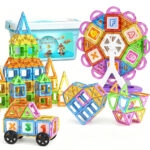
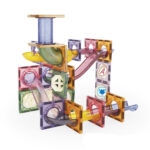
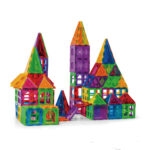
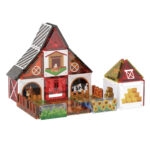

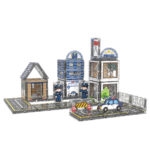
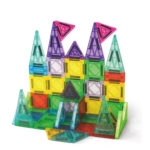
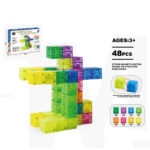
Understanding custom building blocks cost
When buyers ask about custom building blocks cost, they often expect a single unit price. In reality, the total project cost includes design, mold tooling, material, molding, assembly, printing, packaging, testing, freight, and order volume.
The most important cost decision is usually whether to use an existing mold or invest in new tooling. Existing molds reduce upfront investment, while new molds provide greater exclusivity and product differentiation.
Existing molds: lower upfront investment
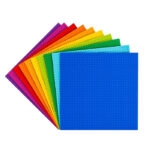
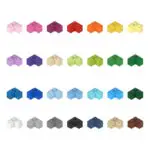
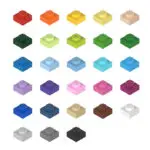
Existing molds are already available from the factory’s standard product library. Buyers can usually customize colors, packaging, instructions, logos, and selected accessories without paying for a completely new mold.
This option is suitable when:
- You want to launch quickly.
- Your budget is limited.
- You need a small or medium first order.
- You want to test market demand.
- You do not require a fully unique brick shape.
The main trade-off is limited exclusivity. Other buyers may be able to order similar base shapes, although branding, color schemes, packaging, and set design can still create differentiation.
New tooling: higher investment, stronger differentiation
New tooling is required when you need a unique brick shape, special figure, proprietary accessory, custom vehicle, or distinctive building system. The mold is developed from your 3D design and becomes a dedicated production asset.
New tooling generally increases upfront cost but can reduce long-term unit cost at higher volumes. Injection molding tooling cost depends heavily on cavity count, part complexity, mold material, surface requirements, and runner system.protolabs+2
Typical cost drivers include:
- Number of cavities.
- Part size and wall thickness.
- Undercuts, slides, lifters, and complex geometry.
- Steel grade and expected mold life.
- Surface finish and texture.
- Hot-runner versus cold-runner system.
- Required tolerances and cosmetic standards.
Industry references show that simple single-cavity molds may start around several thousand dollars, while complex multi-cavity production tools can cost far more.dfma+2
Existing molds vs. new tooling
| Factor | Existing molds | New tooling |
|---|---|---|
| Upfront mold cost | Low to none | Medium to high |
| Lead time | Shorter | Longer |
| Product exclusivity | Limited | High |
| Design flexibility | Limited to existing geometry | Full custom geometry possible |
| Best order volume | Small to medium | Medium to large |
| Brand differentiation | Moderate | Strong |
| Risk | Lower | Higher if design changes later |
| Long-term unit cost | May remain higher | Can decrease at scale |
How to calculate total project cost
A useful formula is:
Total landed cost=Tooling cost+(Unit cost×Order quantity)+Packaging+Testing+Freight+Duties
Tooling cost is usually amortized across production volume. A mold that appears expensive at 5,000 units may become highly competitive at 50,000 or 100,000 units, because the fixed investment is spread across more pieces.studiored+1
For example, if new tooling costs USD 10,000 and the factory needs to recover that investment over production runs, the required volume may be much higher than for an existing-mold project. MOQ is therefore often driven by tooling amortization rather than an arbitrary factory rule.haizol+1
When existing molds make sense
Choose existing molds if you are launching a first collection, testing an educational-product line, creating a promotional set, or building a private-label offering. You can still customize the product through:
- Custom color combinations.
- Printed logos or patterns.
- Custom minifigures or accessories where available.
- Instruction manuals and story content.
- Retail packaging design.
- Set configuration and piece count.
This approach allows brands to enter the market with controlled investment while retaining room to upgrade to fully custom tooling later.
When new tooling makes sense
Choose new tooling if your product depends on a unique shape, proprietary character, licensed design, special play feature, or recognizable brand identity. New molds are also preferable when the existing mold cannot meet your required dimensions, safety design, or assembly system.
Before committing, request a DFM review. This should identify potential molding problems, such as uneven wall thickness, difficult ejection, flash risk, sink marks, or tolerance issues. Tighter tolerances and complex features increase both mold cost and production-control requirements.protolabs+2
Questions to ask before quoting
Send your supplier the following information to receive an accurate custom building blocks cost estimate:
- 3D files, 2D drawings, or reference images.
- Target retail price and expected annual volume.
- Material preference, such as ABS or PP.
- Color quantity and decoration method.
- Packaging format and retail requirements.
- Target market and applicable safety requirements.
- Required delivery date.
- Whether you need exclusivity for the mold.
Work with Lionetoys
Lionetoys helps B2B buyers compare existing-mold solutions and new-tooling projects based on budget, order volume, brand positioning, and time to market. Whether you need a private-label set or a fully custom building block system, our team can provide an itemized quotation and development plan.
Visit https://www.lionetoys.com to request a custom building block quotation or discuss your mold requirements.