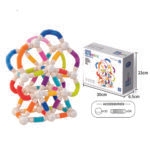
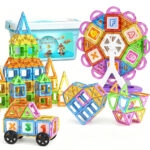
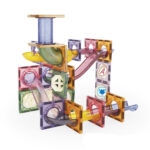
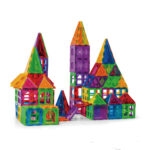
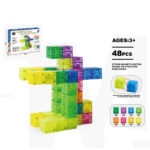
Choosing a magnetic building blocks manufacturer in China is not just about finding the lowest quotation. For toy buyers, the right factory must be able to deliver safe construction, stable magnetic performance, reliable production capacity, suitable compliance documents, consistent packaging, and on-time shipment.
Magnetic tiles may look similar in online catalogs, but product quality can vary greatly. Differences in ABS material, magnet strength, tile thickness, ultrasonic welding, testing support, quality control, and OEM capability can affect your customer reviews, return rate, brand reputation, and final landed cost.
If you are sourcing magnetic building blocks wholesale for a retailer, distributor, e-commerce store, or private-label toy brand, use the following 10 questions to assess whether a supplier is the right long-term partner.
1. Are You a Real Magnetic Building Blocks Factory?
The first question is simple: Are you a manufacturer, a trading company, or both?
A trading company can be useful in some cases, especially when you need to source multiple toy categories from different factories. However, when you are developing a magnetic tile range, working with a direct manufacturer can provide more control over product details, sampling, quality standards, customization, and production schedules.
Ask the supplier:
- Do you own or operate the production facility?
- Where is the factory located?
- What product categories do you manufacture in-house?
- Can you provide factory photos, production-line videos, or a virtual factory tour?
- Can buyers arrange a factory audit or third-party inspection?
- Which processes are completed internally, and which are outsourced?
- How many production lines do you have for magnetic building blocks?
- What is your monthly production capacity?
A genuine factory should be able to explain its manufacturing process clearly. For magnetic building blocks, this may include plastic injection molding, magnet assembly, ultrasonic welding, printing, accessory assembly, packaging, quality inspection, and export-carton packing.
For buyers sourcing from China, factory location can also matter. Shantou Chenghai is widely known as an important toy-manufacturing region, with a large supply base for plastic toys, educational toys, construction toys, and toy accessories. A factory located in a specialized toy-production area may have better access to skilled labor, packaging suppliers, molds, components, and export support.
At Lione Toys, we are based in Chenghai, China, and focus on magnetic building blocks and educational toy development for overseas buyers. Our goal is to provide direct factory support from product selection and sampling through packaging, inspection, and export shipment coordination.
2. What Types of Magnetic Building Blocks Do You Produce?
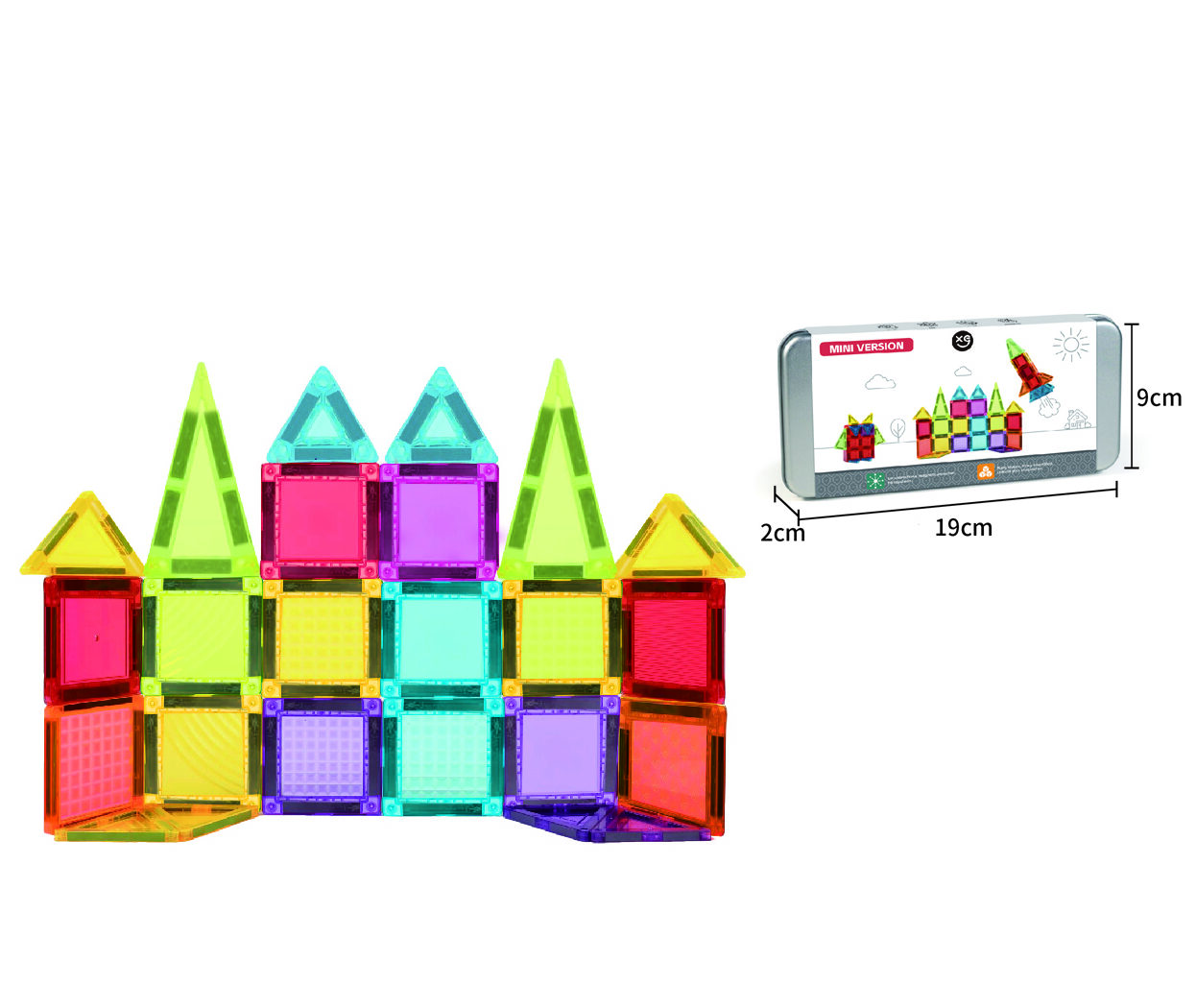
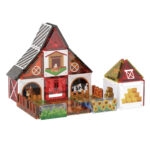
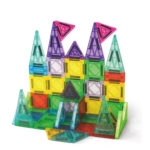
Not all magnetic tile manufacturers specialize in the same product range. Some factories focus mainly on basic translucent tile sets. Others can develop themed sets, vehicle sets, ball-run systems, road tiles, educational sets, animal accessories, or custom magnetic construction concepts.
Before requesting a quotation, ask the factory which categories it produces regularly.
A capable magnetic tiles manufacturer China should be able to explain its existing product range, including:
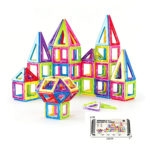
- Classic magnetic tile starter sets
- Magnetic building blocks with different shapes
- Large magnetic tiles
- Transparent and solid-color magnetic tiles
- Dinosaur magnetic building sets
- Princess castle magnetic tile sets
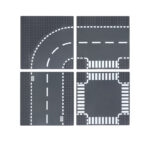
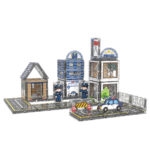
- Road-and-vehicle magnetic tile sets
- Space, farm, zoo, and rescue-themed sets
- Magnetic ball-run sets
- Magnetic building blocks with numbers, letters, or learning prints
- Magnetic tiles with wheels, figures, windows, doors, and special accessories
- Classroom, family, and premium gift sets
This matters because a supplier with experience in your target category can usually offer stronger product advice. For example, a road-themed set needs enough road pieces, ramps, connectors, vehicle bases, and basic tiles to create a satisfying play scene. A castle set needs functional doors, windows, roof pieces, and enough standard geometry to support stable structures.
Ask for a complete catalog, component list, packaging photos, product dimensions, age recommendations, and available test reports. Do not make a sourcing decision based only on one hero photo.
3. What Is Your MOQ?
MOQ, or minimum order quantity, affects unit price, inventory risk, packaging flexibility, and the type of customization you can achieve.
A factory may offer different MOQs depending on whether you select a stock product, customize a color box, change product colors, add printed tiles, or develop a fully new OEM project.
Ask the manufacturer to quote separately for:
| Project Type | Common MOQ Situation | Buyer Consideration |
|---|---|---|
| Standard product with factory packaging | Usually the lowest MOQ | Good for testing a market or launching quickly |
| Standard product with logo sticker | Slightly higher MOQ or handling charge | Suitable for basic brand identification |
| Standard product with custom color box | Higher MOQ due to printing requirements | Useful for private-label retail programs |
| Custom instruction manual or inserts | May require printing MOQ | Helps strengthen brand identity and retail readiness |
| Custom tile colors or printed tiles | Higher MOQ | Requires color approval and production planning |
| New themed set using existing parts | Higher MOQ than stock items | Good option for differentiated ranges |
| New molds or exclusive product development | Highest MOQ and investment | Better suited to established brands or larger programs |
Low MOQ can be attractive, especially for new brands and online sellers. But buyers should balance MOQ against unit cost. A very low order quantity may result in a high factory price, higher packaging cost per unit, and less efficient freight.
The best approach is to ask for tiered pricing, such as 500, 1,000, 3,000, and 5,000 sets. This gives you a clearer picture of how volume affects cost.
At Lione Toys, we support buyers with both standard magnetic building block options and customized product programs. MOQ depends on the product, packaging, and level of customization, so sharing your target quantity early helps us recommend the most practical solution.
4. What Type of Magnets Do You Use?
Magnets are central to the performance and safety of magnetic building blocks. Two tile sets may have a similar appearance but feel very different in use because of magnet size, grade, quantity, positioning, and consistency.
Ask the manufacturer:
- What type of magnet is used?
- What magnet grade and size are used for each tile shape?
- How many magnets are used in standard squares, triangles, rectangles, and larger pieces?
- Are larger pieces reinforced with additional magnets?
- How is magnetic strength checked during production?
- Are magnet polarity and orientation controlled consistently?
- Can the factory provide samples for magnetic-strength comparison?
The right magnetic force should allow children to build stable structures without making the tiles difficult to separate. A set with weak magnets can cause towers, bridges, castles, and ramps to collapse easily. A set with inconsistent magnet installation may produce frustrating play results because some tiles connect more securely than others.
When testing samples, build several models rather than only connecting two tiles together. Try a tall tower, a cube, a bridge, a house, a vehicle, and a themed structure. This reveals whether the magnetic performance supports real play.
For premium magnetic building blocks, consistent holding force is more important than a simple “strong magnet” claim.
5. How Are the Magnets Sealed Inside the Tiles?
This is one of the most important questions for buyers of magnetic building toys.
Magnets must remain securely enclosed during normal use and foreseeable misuse. The plastic shell, tile thickness, welding process, and quality inspection procedures all affect magnet retention.
Many magnetic tiles are made from two plastic halves joined together. A robust ultrasonic-welding process can help create a secure sealed edge around the tile. However, buyers should not accept a general claim such as “ultrasonic welded” without inspecting the physical sample and asking about process control.
Ask the factory:
- Are the tiles ultrasonically welded?
- Is the welding process completed in-house?
- How is welding strength checked?
- Does the factory conduct drop tests or abuse tests?
- How are tile seams inspected?
- How are magnets placed before welding?
- Are there additional internal structures to keep magnets in position?
- How are defective tiles identified and removed?
- Can the supplier provide photos or videos of the production process?
Inspect sample tiles carefully. Look for gaps, uneven seams, rough welding marks, loose corners, surface cracks, or visible stress marks. Pay special attention to long triangles, large tiles, wheel bases, windows, and special-shaped accessories, because these parts may experience more stress during play.
At Lione Toys, magnetic building block construction is developed with ABS material and ultrasonic sealing processes intended to support durable tile structure. We also recommend that buyers review samples and confirm the applicable compliance requirements for their market before bulk production.
6. What Safety Tests and Certifications Can You Provide?
A responsible supplier should understand that different markets have different toy-safety and product-compliance requirements. Buyers should confirm requirements based on the exact SKU, age grade, destination, material composition, and included accessories.
For U.S. children’s toys, products designed or intended primarily for children aged 12 and under must generally be third-party tested by a CPSC-accepted laboratory and certified through a Children’s Product Certificate by the manufacturer or importer. The applicable ASTM F963 toy-safety requirements can include magnet-related provisions.
For the European Union, toys placed on the market must meet applicable safety requirements and carry CE marking. The European Commission states that CE marking is the manufacturer’s declaration that the toy meets applicable EU requirements, and it must be visible, legible, and indelible on the toy, label, packaging, or accompanying material where appropriate.europa+1
Ask your supplier:
- Which test reports are available for this exact product?
- Which countries or regions are covered by the reports?
- Does the report show the same product photos and SKU?
- What age grade is listed on the report?
- Are magnetic components included in the testing scope?
- Are printed tiles, figures, wheels, and other accessories covered?
- What material and chemical tests have been completed?
- Can you provide a Children’s Product Certificate support file or relevant documentation for U.S. buyers?
- Can you support CE-related documentation for EU buyers?
- If product materials or accessories change, does the supplier recommend updated testing?
Do not rely on a certificate image in a catalog. Review the full report and verify the product details. For overseas products, U.S. importers are responsible for issuing the required Children’s Product Certificate based on applicable testing and compliance records.cpsc
A supplier can support your compliance process, but the importer, brand owner, and seller should understand their own legal responsibilities in the destination market.
7. Can You Provide Samples Before Bulk Production?
Never place a large magnetic tile order without evaluating samples.
A sample allows you to check actual product quality, magnetic performance, tile thickness, color consistency, printing, packaging, instructions, and accessory fit. It also helps you compare different factories based on physical evidence rather than price alone.
Ask the supplier:
- Is the sample from current production or a showroom sample?
- What is the sample lead time?
- What is the sample cost?
- Can the sample fee be credited toward a future bulk order?
- Can you receive a stock sample before starting customized development?
- Can the supplier create a pre-production sample after artwork approval?
- Can you approve colors, printing, box design, and instructions before mass production?
- How will the factory control consistency between the approved sample and final bulk goods?
When reviewing samples, check the following:
- Magnet strength and consistency
- Plastic clarity, color, and surface quality
- Tile thickness and edge smoothness
- Ultrasonic-welded seams
- Magnetic alignment
- Print quality on themed tiles
- Fit and durability of wheels, figures, and accessories
- Accuracy of piece count
- Packaging strength
- Labeling, warnings, age grading, and barcode placement
- Instruction clarity
- Carton dimensions and product weight
For customized projects, buyers should approve a final pre-production sample before mass production begins. This is especially important when you have custom colors, printed patterns, private-label packaging, translated instructions, or market-specific warning labels.
8. Do You Support Custom Packaging and Private Label?
Custom packaging is one of the most practical ways to turn a standard magnetic tile set into a branded product range.
For retailers, importers, Amazon sellers, and private-label toy brands, packaging affects shelf presentation, consumer trust, online listing quality, perceived value, and repeat purchase potential.
Ask the factory what packaging customization it can support:
- Custom color box
- Custom logo
- Brand name and trademark placement
- Product name and theme design
- Private-label instruction manual
- Warning labels and age grading
- Barcode labels
- Product inserts
- Storage bags
- Custom tray or inner packaging
- Gift-box packaging
- Carton marks and shipping labels
- Product photography and marketing materials
A good supplier should be able to provide packaging templates, dielines, artwork requirements, and printing guidance. Before printing begins, confirm the final artwork carefully, including country-of-origin marking, warning statements, language requirements, age grading, importer details, barcodes, recycling marks, and product claims.
Avoid making unsupported marketing claims such as “non-toxic,” “safe,” “educational,” or “STEM” without confirming that the claim is appropriate and substantiated for your market.
At Lione Toys, we support OEM and private-label packaging development for magnetic building blocks. Buyers can start with stock product configurations or develop themed sets, branded packaging, instruction manuals, inserts, and selected custom components according to their target market.
9. What Is Your Production Lead Time?
Lead time affects your launch plan, inventory level, cash flow, seasonal sales opportunities, and retailer delivery commitments.
A factory’s production lead time can change according to:
- Order quantity
- Product complexity
- Existing stock availability
- Customization level
- Packaging printing schedule
- Raw material availability
- Seasonal production demand
- Factory capacity
- Test or inspection requirements
- Shipping-booking availability
Ask the supplier for a realistic timeline covering the full project, not only the final assembly stage:
| Project Stage | What Buyers Should Confirm |
|---|---|
| Sample preparation | Sample production time and courier transit estimate |
| Artwork confirmation | Time for packaging, manual, label, and print approval |
| Pre-production sample | Timing for customized product and packaging approval |
| Bulk production | Manufacturing lead time after deposit and final approval |
| Quality inspection | Inspection date, report timing, and rework process if needed |
| Final packing | Carton completion and shipping-mark confirmation |
| Shipping booking | Port cut-off date, vessel schedule, and loading plan |
| Final delivery | Estimated transit, customs clearance, and local delivery timing |
Be careful if a supplier offers an unusually short lead time without asking detailed questions about packaging, customization, compliance, or volume. A credible factory should clarify your requirements before committing to production dates.
For seasonal sales, such as Christmas, back-to-school, or major promotional events, allow extra time for packaging approval, testing, booking, customs clearance, and possible inspection corrections.
10. Do You Support OEM and ODM Development?
OEM and ODM support can help buyers create a magnetic toy range that is harder to compare directly with standard market products.
OEM usually means producing an existing or adapted product under your brand, with customized packaging, colors, prints, components, or product configuration.
ODM generally involves a manufacturer supporting product design and development based on your concept or market need. This may include themed sets, new accessories, revised tile shapes, custom figures, different packaging formats, or new play features.
Ask the supplier:
- Can you customize the tile color mix?
- Can you create printed tiles with our designs?
- Can you develop a themed product using existing molds?
- Can you add animals, vehicles, figures, or educational accessories?
- Can you design a custom instruction book?
- Can you create new packaging and retail displays?
- Do you offer design support for new product concepts?
- Are new molds required?
- Who owns the molds after payment?
- Can the product be exclusive to our brand or territory?
- What is the development timeline?
- What are the tooling, sampling, and testing costs?
- How will intellectual property and artwork be handled?
For new molds, buyers should confirm ownership, exclusivity, tooling cost, maintenance, expected production life, revision process, and confidentiality terms before beginning development.
A practical strategy for many buyers is to start with a proven magnetic tile platform and create differentiation through a themed mix, printed tiles, special accessories, branded instructions, and custom packaging. This offers stronger product identity without the cost and risk of full mold development.
How to Compare Manufacturers Fairly
After asking the 10 questions above, avoid making a decision based only on unit price. Create a supplier-comparison sheet using the same requirements for every factory.
Include:
- Factory location and manufacturing capability
- Product range and specialization
- MOQ and price at different quantity levels
- Piece list and tile dimensions
- Magnet specification and construction method
- ABS material and tile thickness
- Ultrasonic welding and quality-control process
- Available test reports and documentation support
- Sample cost and lead time
- OEM and ODM capability
- Packaging options
- Bulk production lead time
- Inspection support
- Carton information
- Shipping terms
- Communication speed and accuracy
A lower quote may be appropriate if the specification is genuinely equivalent. But if the lower price comes from weaker magnets, thinner tiles, basic plastic, limited testing, poor packaging, or unclear quality control, it may create more cost after the product reaches the market.
Work With Lione Toys
Choosing the right magnetic building blocks manufacturer in China requires more than comparing catalogs and price lists. Buyers should evaluate factory capability, magnetic performance, ABS material, ultrasonic sealing, safety documentation, sample quality, packaging options, production lead time, and OEM/ODM support.
Lione Toys is a Chenghai-based manufacturer and supplier focused on magnetic building blocks and educational toys for international buyers. We support standard magnetic tile sets, themed magnetic building block collections, private-label packaging, OEM projects, product sampling, quality control, compliance-document coordination, and export shipment preparation.
Our product-development approach combines:
- Magnetic building block manufacturing experience
- ABS plastic construction
- Ultrasonic sealing processes
- Themed magnetic tile development
- Custom packaging and branded instruction manuals
- OEM and ODM project support
- Flexible MOQ options based on product configuration
- Testing-document support for target-market requirements
- Export-oriented communication and delivery coordination
Request our latest magnetic building blocks catalog and wholesale quotation.
Contact Lione Toys through www.lionetoys.com to discuss your target product, order quantity, packaging requirements, destination market, and customization needs.