
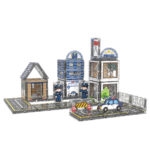
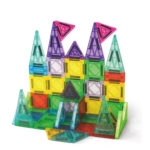
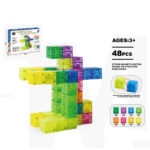
For toy importers, distributors, and private-label brands, magnetic tiles and magnetic sticks are both popular construction-toy options, but they serve different age groups, play styles, and retail strategies.
Magnetic tiles are typically aimed at preschool and early-primary children who build 2D and 3D structures using squares, triangles, rectangles, and special shapes. Magnetic sticks and balls (or sticks and spheres) are usually positioned for older children who build complex 3D geometric models, frameworks, and architectural-style structures.
Choosing between them is not only a product decision. It is a category decision that affects your target customer, safety requirements, price point, packaging size, repeat purchase potential, and long-term range planning.
This article compares magnetic tiles and magnetic sticks from a buyer’s perspective and shows how to build a product program that works for your market.
Understanding the Two Product Types
Magnetic Tiles
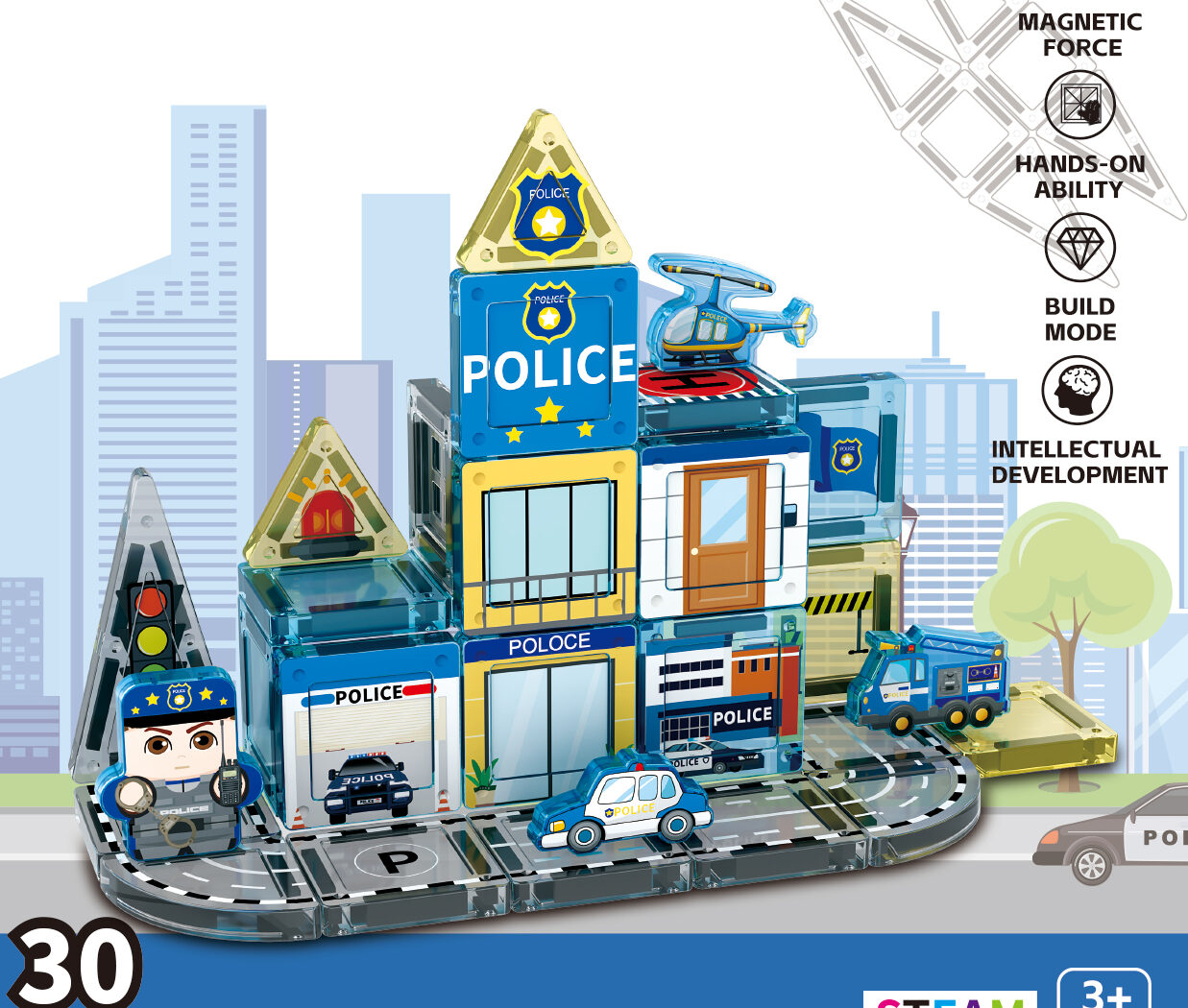
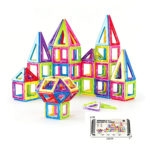
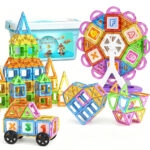
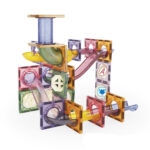
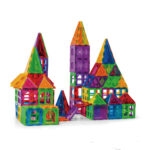
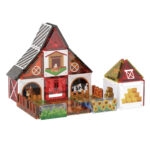
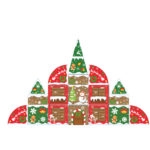
Magnetic tiles are flat geometric pieces with embedded magnets. Common shapes include squares, equilateral triangles, right triangles, rectangles, large squares, and special pieces such as windows, doors, wheels, road tiles, and themed printed panels.
Children can connect tiles edge-to-edge to create flat patterns, then fold them into 3D shapes such as cubes, pyramids, houses, castles, vehicles, and larger themed worlds.
Magnetic tiles are often marketed as:
- Preschool construction toys
- STEM learning toys
- Educational magnetic building sets
- Themed magnetic building blocks
- Magnetic tile starter sets and expansion packs
They are widely used in homes, preschools, kindergartens, and early-learning environments.
Magnetic Sticks and Balls
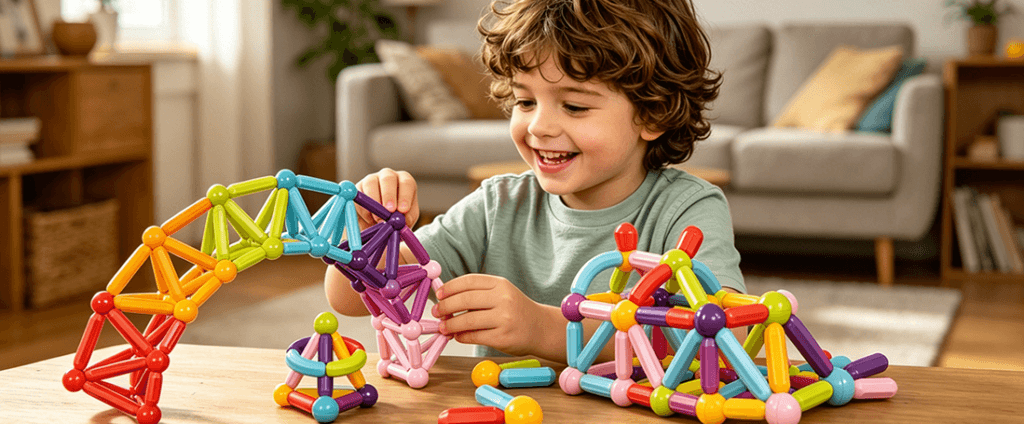
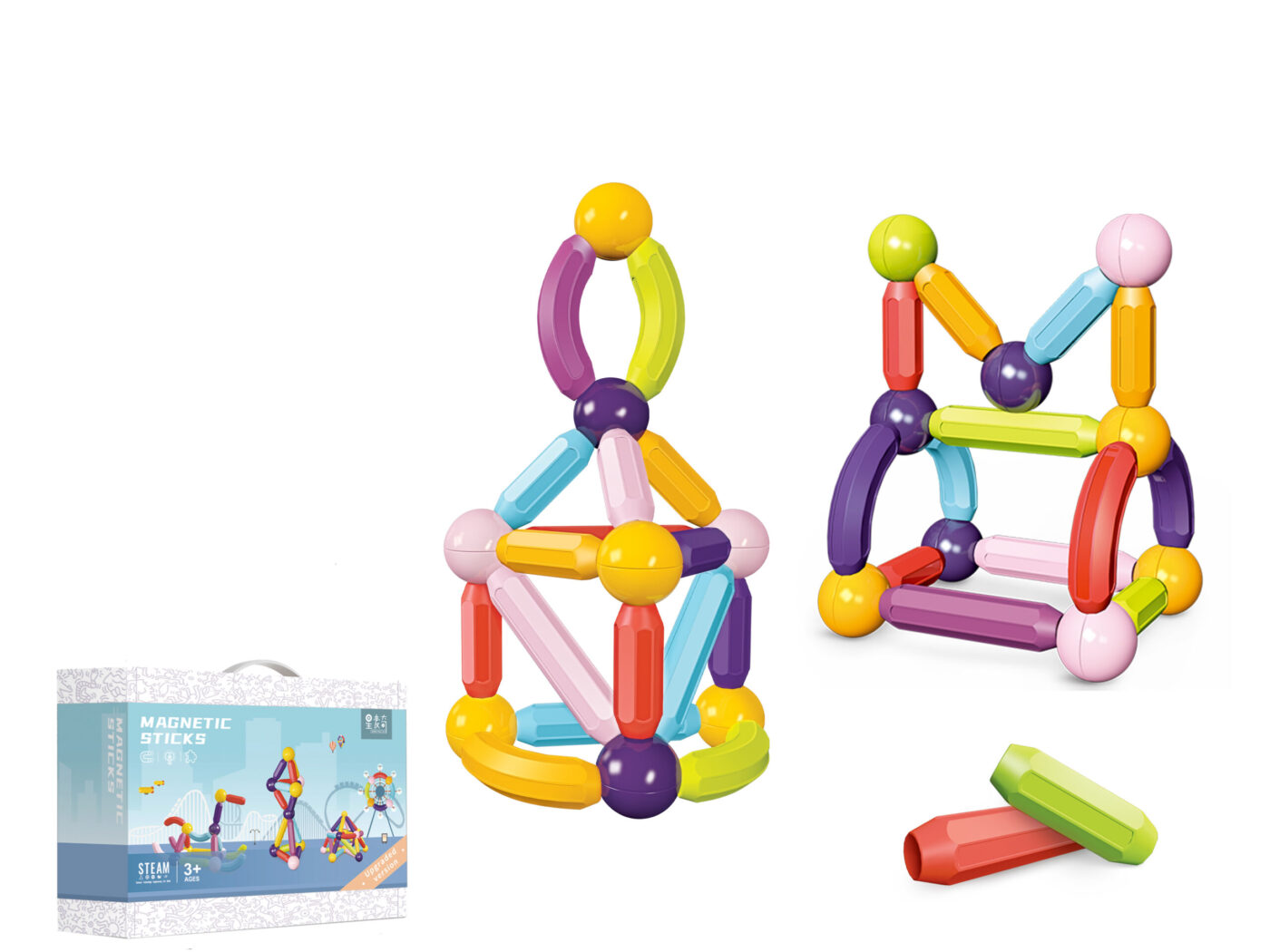
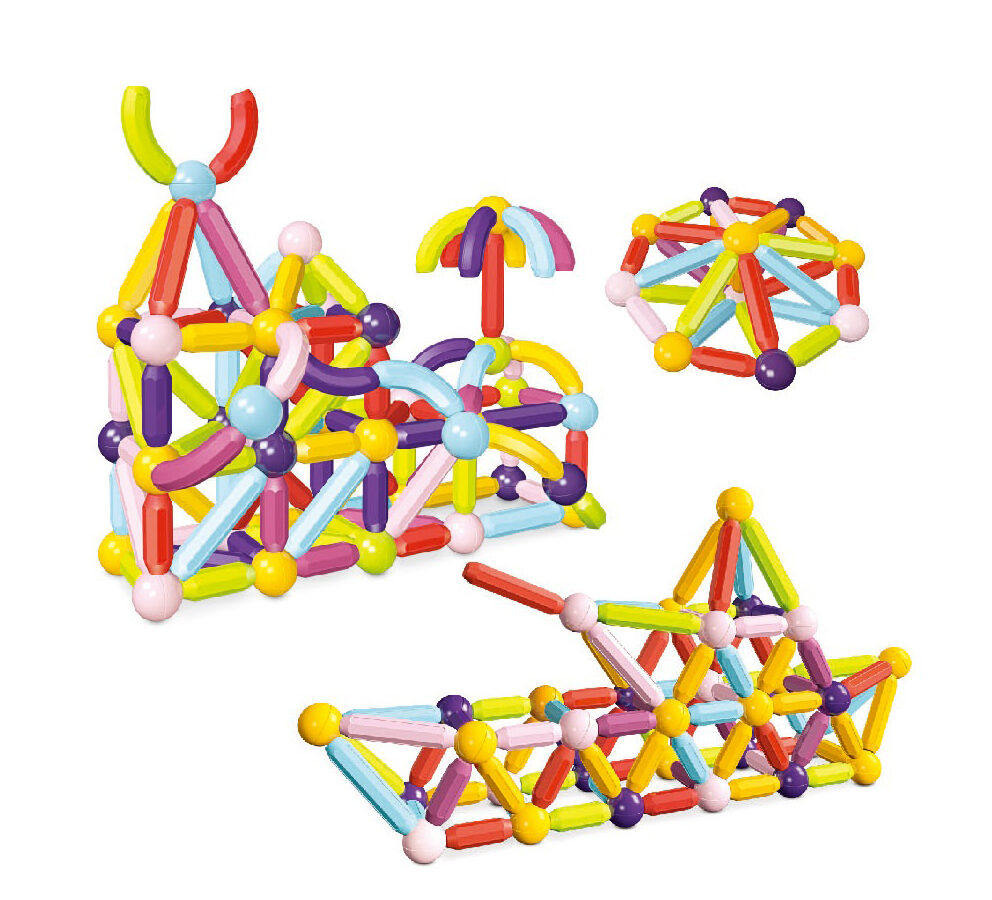
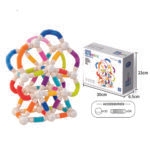
Magnetic sticks and balls sets consist of metal or plastic rods with magnets at the ends, combined with steel balls or magnetic spheres. Children connect sticks to balls to create 3D frameworks, geometric solids, bridges, towers, and complex architectural models.
These sets are often positioned as:
- Advanced construction toys
- Geometry and engineering toys
- STEM building sets for older children
- Magnetic rod-and-sphere construction kits
- Educational science and math toys
They are popular among children who enjoy building detailed 3D structures and exploring geometric concepts.
Key Differences at a Glance
The table below highlights the main differences that matter to toy buyers.
| Comparison Item | Magnetic Tiles | Magnetic Sticks and Balls |
|---|---|---|
| Typical age range | 3+ or 4+ (depending on accessories and market rules) | 6+, 8+, or higher, depending on small parts and local regulations |
| Main building style | 2D patterns and 3D enclosed structures (houses, castles, vehicles) | 3D frameworks, geometric solids, open structures |
| Core pieces | Squares, triangles, rectangles, special shapes, printed tiles | Rods/sticks, steel balls or magnetic spheres, sometimes panels |
| Play focus | Open-ended construction, themed worlds, role play | Geometry, engineering, structural design, advanced building |
| Small parts risk | Lower when using standard tiles; higher with small figures and accessories | Higher due to small balls and connectors; requires careful age grading |
| STEM positioning | Shapes, symmetry, spatial reasoning, early engineering | Geometry, structural engineering, advanced spatial reasoning |
| Typical retail price | Entry to mid-range, with premium gift sets available | Often mid to premium, especially for large sets |
| Packaging volume | Moderate; can be optimized with trays and compact boxes | Often larger due to long rods and multiple components |
| Range extension | Themed sets, expansion packs, vehicles, ball-run, road sets | Larger sets, additional rods and balls, specialized connectors |
| OEM customization | High: colors, prints, themes, packaging, accessories | Moderate: rod length, ball count, color, packaging, limited shapes |
This overview shows that magnetic tiles and magnetic sticks are not direct substitutes. They can coexist in a portfolio as complementary products for different age groups and play needs.
Age Suitability and Safety Considerations
Age grading is one of the first factors toy buyers should evaluate.
Magnetic Tiles
Standard magnetic tiles are relatively large and thick, which can make them suitable for younger children when designed and tested appropriately. However, age suitability depends on:
- Tile size and thickness
- Presence of small accessories such as figures, wheels, or mini parts
- Packaging warnings and age recommendations
- Applicable toy-safety rules in the destination market
For U.S. children’s products, toys intended primarily for children aged 12 and under must generally be third-party tested and certified as compliant with applicable safety requirements, including relevant sections of ASTM F963. Magnets are specifically highlighted in safety guidance because swallowed magnets can cause serious internal injuries.health.harvard+1
For magnetic tile sets aimed at preschool children, buyers should:
- Avoid very small accessories for the youngest age groups
- Ensure magnets are securely enclosed within the tiles
- Confirm that test reports cover the exact SKU and age grade
- Review packaging warnings and age recommendations carefully
Magnetic Sticks and Balls
Magnetic sticks and balls sets often include small components, such as steel balls or small connectors. These parts can present a choking hazard for young children and require strict age grading and warnings.
Safety guidance from pediatric and consumer-safety sources commonly advises that:
- Toys with small parts should be kept away from children under 3 years old
- Small balls and ball-shaped pieces are generally not suitable for children under 6 years old
- Magnetic components should be used only by children old enough to understand safety instructions and not put parts in their mouthshealth.harvard+2
Many suppliers and industry references position magnetic rods and spheres for ages 8+ due to small parts and strong magnets, while magnetic puzzles and tiles are often recommended for ages 3–7 because of larger, safer pieces.
For buyers, this means magnetic sticks and balls sets typically require:
- Clear age grading, such as 6+, 8+, or higher
- Prominent small-parts and magnet warnings
- Careful review of applicable regulations in the target market
- Consideration of whether the product fits your customer profile
When in doubt, consult your compliance partner, laboratory, or legal adviser to confirm age grading and labeling requirements for your specific product and market.
STEM and Educational Value
Both magnetic tiles and magnetic sticks are frequently marketed as STEM toys, but they emphasize different learning aspects.
Magnetic Tiles
Magnetic tiles help children explore:
- Basic geometry: squares, triangles, rectangles, and combinations
- Symmetry and patterns
- Spatial reasoning and 3D visualization
- Balance and structural stability in simple buildings
- Color recognition and sorting
- Early engineering concepts through themed builds
Research on construction play indicates that building with blocks and magnetic tiles supports spatial reasoning and early mathematical thinking, including geometry and proportional reasoning. Magnetic building toys are often positioned as STEM tools because they introduce concepts such as magnetism, polarity, balance, and structural stability through hands-on play.sciencebasedkids+3
For preschool and early-primary markets, magnetic tiles offer an accessible entry point into construction play. Children can quickly create recognizable structures, such as houses, castles, vehicles, and animals, which supports confidence and engagement.
Magnetic Sticks and Balls
Magnetic sticks and balls sets emphasize:
- Advanced geometry: polyhedra, prisms, pyramids, and complex solids
- Structural engineering and framework design
- Spatial reasoning in three dimensions
- Mathematical patterns and symmetry
- Problem solving through complex builds
These sets are often used by older children who enjoy challenging builds, architectural models, and scientific exploration. They can be particularly suitable for STEM programs, after-school clubs, and gift markets for children who already have experience with construction toys.
Industry references note that magnetic rods and spheres focus on 3D structures and spatial reasoning, while magnetic tiles and puzzles focus more on pattern recognition and shape learning for younger children.
For toy buyers, the educational positioning should match your target customer:
- Preschool and early-primary: magnetic tiles
- Upper-primary and beyond: magnetic sticks and balls, possibly alongside advanced tile sets
Product Range and Repeat Purchase Potential
A strong product range encourages repeat purchases and higher average order value.
Magnetic Tiles
Magnetic tiles are well suited to a tiered range:
- Starter sets (for example, 40–60 pieces)
- Themed sets (dinosaur, castle, space, road, farm, rescue, etc.)
- Expansion packs (additional tiles, wheels, figures, ball-run, road pieces)
- Premium or family sets (120–200+ pieces)
- Classroom or bulk sets
Because tiles are compatible within a system, children can start with a basic set and add themed sets or expansion packs over time. This creates natural opportunities for repeat purchase, gift buying, and seasonal promotions.
Themed magnetic tiles also support differentiated retail assortments. A buyer can offer a classic translucent set, a dinosaur adventure set, a princess castle set, and a road-and-vehicle set, each with distinct packaging and play story.
Magnetic Sticks and Balls
Magnetic sticks and balls sets are often sold as:
- Small starter sets (for example, 50–100 pieces)
- Medium and large sets (200–500+ pieces)
- Specialized geometry or engineering sets
- Classroom or educational kits
Range extension is possible through larger piece counts, additional rods and balls, and specialized connectors. However, the opportunity for themed storytelling is generally more limited than with magnetic tiles.
Repeat purchase potential exists, especially when children move from a small set to a larger set or when schools and programs buy multiple kits. But the purchase cycle may be longer because a large set can satisfy a child’s building needs for an extended period.
For buyers focused on frequent repeat sales and seasonal gifting, magnetic tiles often provide more flexible range architecture. For buyers targeting older children, STEM programs, or premium construction toys, magnetic sticks and balls can be a strong complementary line.
Packaging, Logistics, and Cost Structure
Packaging and logistics affect shelf presence, e-commerce listings, freight cost, and final margin.
Magnetic Tiles
Magnetic tiles are usually packed in color boxes with inner trays or inserts. Packaging can be optimized to reduce volume while maintaining product protection.
Key considerations:
- Box size relative to piece count
- Inner tray design and material
- Instruction manual size and page count
- Additional accessories, such as storage bags or activity cards
- Master carton dimensions and units per carton
- Container-loading efficiency
Because tiles are relatively compact, buyers can often achieve good carton utilization, especially with well-designed packaging. This can help control sea-freight cost per unit.
Magnetic Sticks and Balls
Magnetic sticks and balls sets often require longer boxes to accommodate rods, plus space for balls and connectors. This can increase carton volume and reduce container-loading efficiency.
Buyers should review:
- Rod length and box dimensions
- Ball count and packaging method
- Inner packaging to prevent movement and noise
- Master carton size and gross weight
- Freight cost per set relative to retail price
For some markets, the higher freight cost per unit may need to be offset by a higher retail price or larger set size.
OEM and Customization Opportunities
OEM capability affects how easily you can differentiate your product from standard market offerings.
Magnetic Tiles
Magnetic tiles offer strong OEM potential:
- Custom color mixes
- Printed tiles with roads, windows, animals, letters, numbers, or themed graphics
- Themed accessories, such as dinosaurs, castles, vehicles, figures, and animals
- Custom instruction books with branded covers and builds
- Private-label packaging in various formats
- Custom storage bags or carry cases
- Exclusive themed combinations
A buyer can start with a proven tile system and create differentiation through themed sets, printed pieces, custom packaging, and branded instructions. This approach reduces development risk while still offering a unique product range.
Magnetic Sticks and Balls
OEM options for magnetic sticks and balls are more limited but still meaningful:
- Rod length and color
- Ball count and color
- Packaging design and size
- Instruction manuals with custom builds
- Educational guides for STEM programs
- Branded packaging for schools or programs
Full mold customization for new rod shapes or connectors is possible but typically requires higher investment and larger order quantities. For many buyers, the most practical approach is to select an existing rod-and-ball system and customize packaging, piece count, and instructions.
Which Product Should You Choose?
The answer depends on your target customer, retail channel, and range strategy.
Choose Magnetic Tiles If:
- Your main customers are parents of preschool and early-primary children
- You want a broad themed range with frequent new launches
- You plan to sell through mass retail, toy stores, gift shops, or e-commerce
- You value strong repeat purchase potential through expansion packs and themed sets
- You want flexible OEM options for colors, prints, themes, and packaging
- You aim for a competitive retail price with good margin and manageable freight
Magnetic tiles are well suited to a core construction-toy program that can grow over time.
Choose Magnetic Sticks and Balls If:
- Your customers include older children, STEM programs, or education buyers
- You want a premium or advanced construction-toy offering
- You are comfortable with stricter age grading and small-parts warnings
- You target gift markets for children who already enjoy building toys
- You plan to sell through educational channels, science stores, or specialty retailers
- You want to complement an existing magnetic tile range with an advanced option
Magnetic sticks and balls can strengthen your portfolio by covering an older age group and a more advanced building style.
Consider Offering Both
Many successful toy importers and brands offer both magnetic tiles and magnetic sticks as part of a broader construction-toy family.
A possible structure:
- Ages 3–7: Magnetic tile starter sets and themed sets
- Ages 6–10+: Advanced magnetic tile sets and ball-run systems
- Ages 8+: Magnetic sticks and balls sets for complex 3D builds
This approach allows you to serve multiple age groups, increase average order value, and create cross-selling opportunities within your own range.
How to Build a Magnetic Building Blocks Topic Cluster
From an SEO and content-marketing perspective, a comparison article like this works best as part of a topic cluster rather than as a standalone page.
A simple cluster structure for magnetic building blocks might include:
- Pillar page:
“Magnetic Building Blocks: The Complete Guide for Toy Buyers” - Cluster articles:
- “How Much Do Magnetic Tiles Cost Wholesale? A 2026 Buyer’s Guide”
- “How to Choose a Magnetic Building Blocks Manufacturer in China: 10 Questions to Ask”
- “The Complete Guide to Themed Magnetic Building Tiles for Toy Buyers”
- “Magnetic Tiles vs Magnetic Sticks: Which Product Should Toy Importers Choose?”
- “Magnetic Tiles Safety and Compliance: What Importers Must Know”
- Money pages (product/category pages):
- Magnetic Tiles category
- Magnetic Sticks and Balls category
- Themed Magnetic Building Sets category
Internal linking best practices recommend linking pillar pages and cluster pages to each other, using reciprocal hub-and-spoke links, and cross-linking related supporting articles.searchengineland+1
In practical terms:
- Link from this comparison article to your magnetic tiles category and magnetic sticks category using clear anchor text.
- Link from your pillar guide to this comparison article and other cluster posts.
- Add 2–5 contextual links to closely related posts, such as pricing, manufacturer selection, themed tiles, and safety.
- Avoid repetitive anchor text and excessive linking; focus on relevance and user value.
This structure helps search engines understand your content relationships and improves the visibility of your core product pages.
Explore Magnetic Tiles and Magnetic Sticks at Lione Toys
Lione Toys supports toy importers, distributors, e-commerce sellers, and private-label brands with both magnetic tiles and magnetic sticks.
Our magnetic tiles range includes:
- Classic magnetic building block sets
- Themed magnetic tile collections (dinosaur, castle, space, road, farm, rescue, etc.)
- Starter sets, expansion packs, and premium gift sets
- Custom colors, printed tiles, accessories, and packaging
- OEM and ODM project support
Our magnetic sticks and balls range includes:
- Rod-and-sphere construction sets for older children
- Various piece counts and set sizes
- Custom packaging and instruction options
- STEM-focused configurations for educational channels
Both product lines are developed with attention to ABS material quality, magnet performance, ultrasonic sealing processes, packaging optimization, and export-oriented order support.
To explore product options, request catalogs, or discuss a tailored range for your market, visit our category pages:
- Magnetic Tiles: www.lionetoys.com/magnetic-tiles
- Magnetic Sticks and Balls: www.lionetoys.com/magnetic-sticks
(Replace the URLs above with your actual category links when publishing.)
Request our latest magnetic building blocks catalog and wholesale quotation through www.lionetoys.com, and let our team help you choose the right mix of magnetic tiles and magnetic sticks for your target customers.