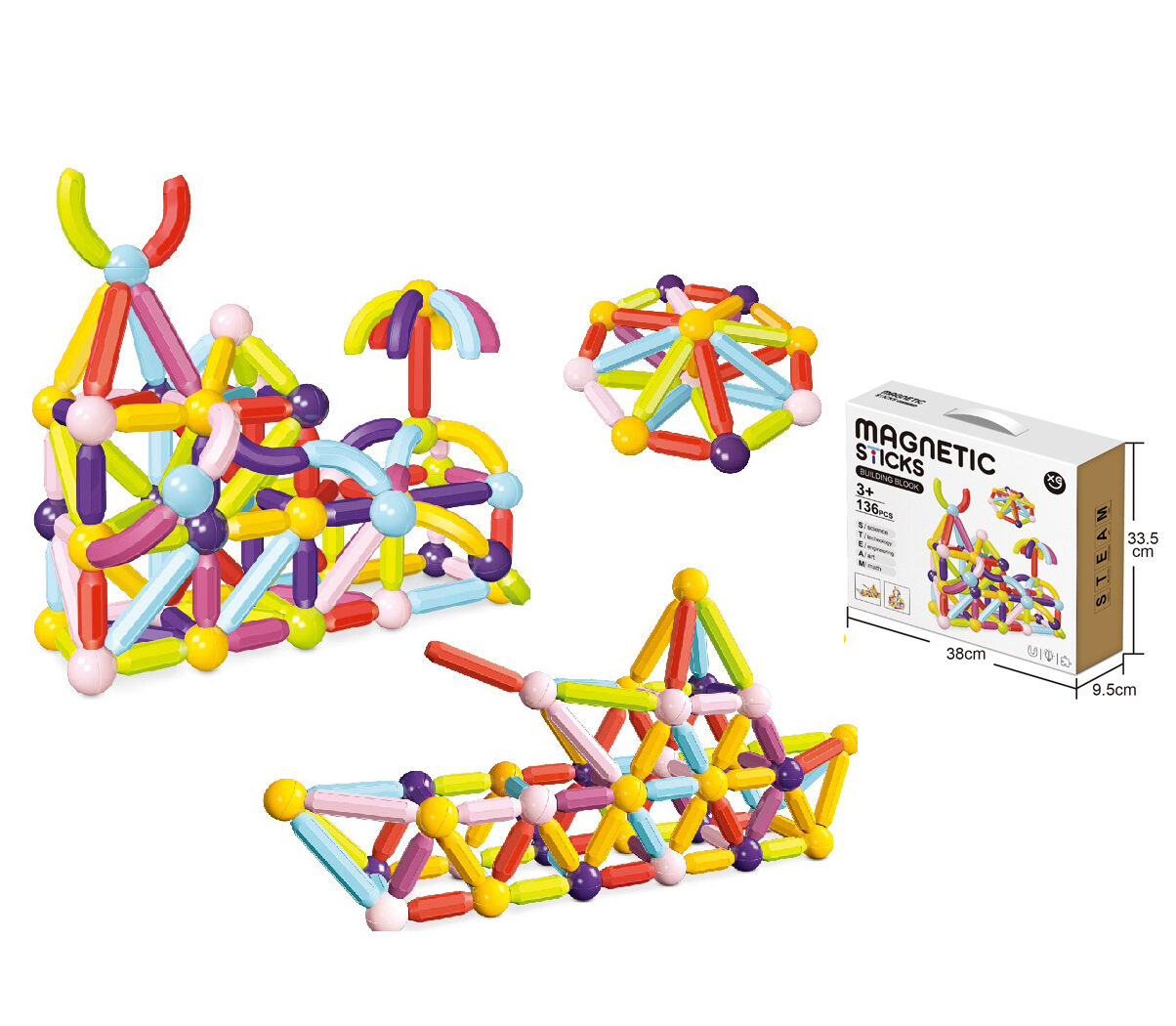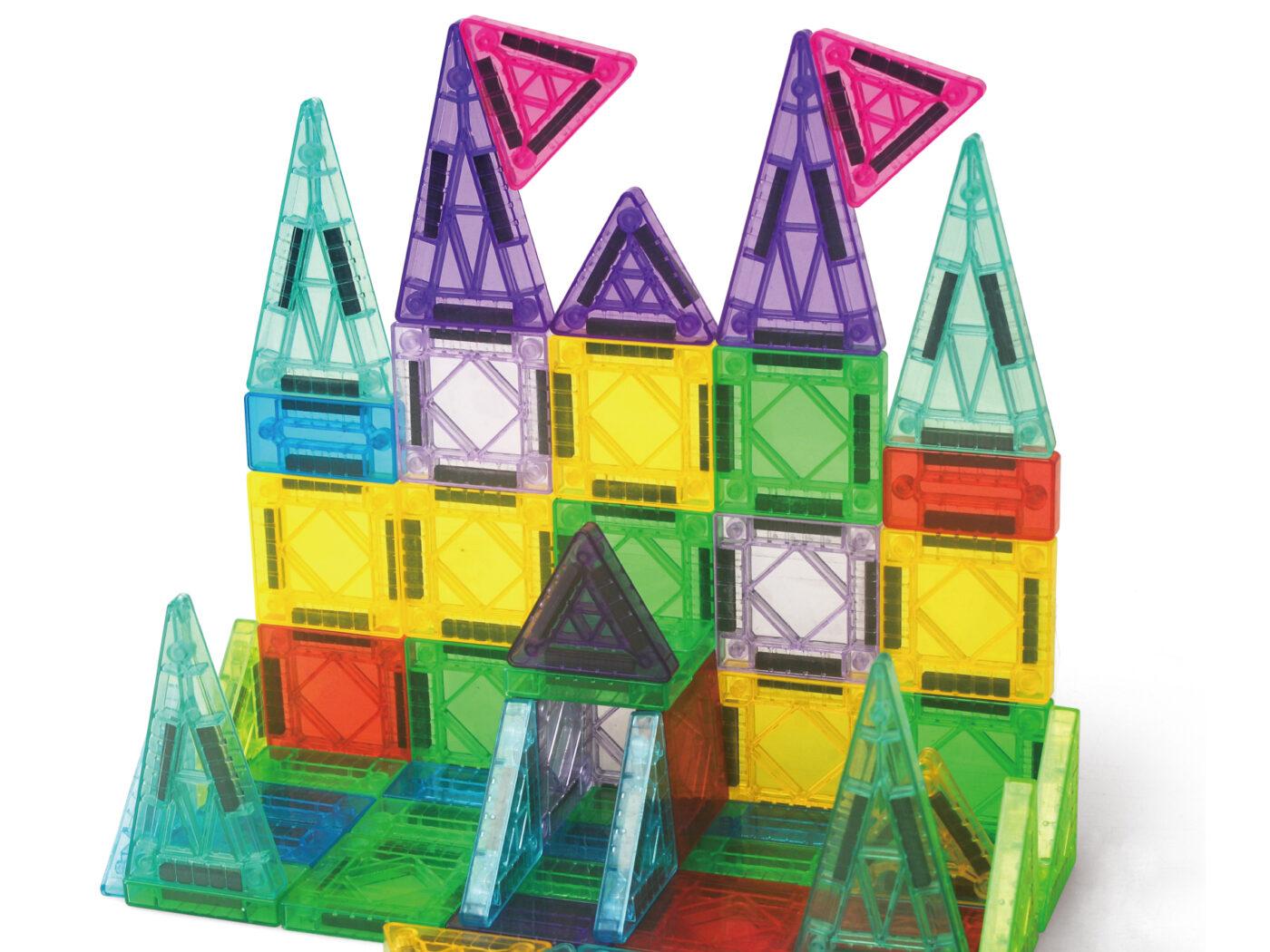
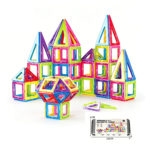
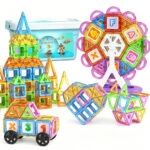
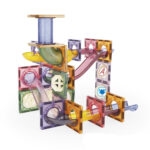
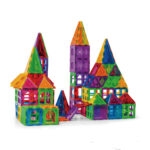
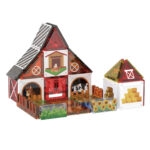
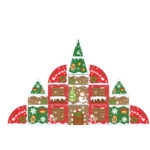
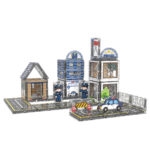
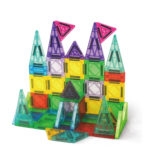
Imagine a child sitting on the living-room floor with a box of magnetic building tiles. At first, the plan is simple: build a small house. Ten minutes later, the house has become a castle, the castle has a bridge, and the bridge is now part of a space station.
That is the appeal of magnetic building tiles. They are easy to start with, but they can grow with the child’s imagination.
For toy brands, importers, distributors, and retailers in Europe and North America, however, a basic set of colorful magnetic tiles is no longer enough. The market is crowded. Parents want educational value. Retailers want products that look different on the shelf. Teachers want meaningful activities. And buyers want products that can support more than one sales season.
This is where themed magnetic building tiles can make a difference.
By combining magnetic construction with themes such as animals, castles, space, fire rescue, and engineering, brands can create products that are easier to understand, easier to market, and more attractive to different customer groups.
Why Basic Magnetic Tiles Need a New Story
Open-ended play is one of the strongest benefits of magnetic building toys. Children can build almost anything with a basic set. But from a retail point of view, “build anything” can sometimes be difficult to communicate.
A buyer looking at a product catalog may ask:
- What is the main play idea?
- Which age group is this for?
- Why should parents choose this product instead of another magnetic tile set?
- Can the product be sold as an educational toy?
- Does the product have an opportunity for repeat purchases?
- Will children understand how to start playing?
A theme gives the product a clear starting point.
For example, an animal-themed set can introduce children to farms, jungles, oceans, or wildlife habitats. A castle set can inspire stories about knights, princesses, towers, and bridges. A space set can lead to conversations about planets, rockets, astronauts, and gravity.
The theme does not have to limit creativity. It simply gives children a familiar world to enter.
For retailers, that makes the product easier to display and explain. Instead of placing another generic magnetic tile set on the shelf, the retailer can build a stronger assortment:
- Animal Discovery Set.
- Castle Adventure Set.
- Space Mission Set.
- Fire Rescue Set.
- Engineering Challenge Set.
This type of product structure helps customers compare products and choose the right set for their children.
Five Themes With Strong Retail Potential
1. Animal Magnetic Building Tiles
Animal themes work well with younger children because animals are easy to recognize and naturally encourage storytelling.
A product line could include:
- Farm animals and barns.
- Jungle animals and habitats.
- Ocean animals and underwater scenes.
- Dinosaurs and prehistoric worlds.
- Pets, animal clinics, and rescue centers.
The educational content can be simple but meaningful. Children can learn about different habitats, animal movement, feeding, shelter, and care.
For example, a retailer could sell a set that allows children to build a farm, then add animals, fences, barns, and a small tractor. A larger set might focus on a wildlife rescue center, creating a story-based play experience instead of just a construction activity.
For B2B buyers, animal sets also offer a clear route to age segmentation:
- Basic animal shapes for ages 3–5.
- Habitat building for ages 5–7.
- Animal rescue and environmental challenges for ages 6 and up.
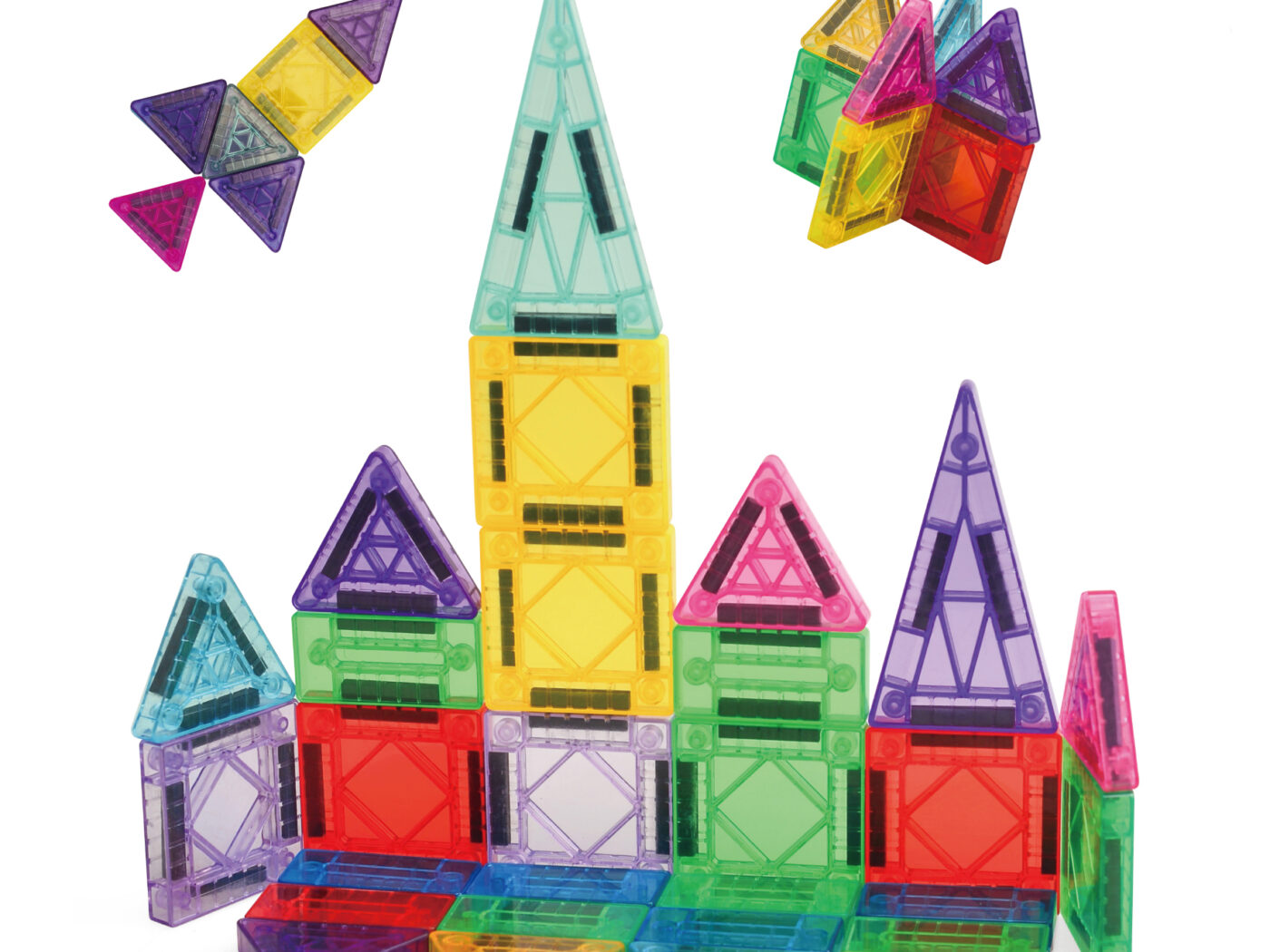
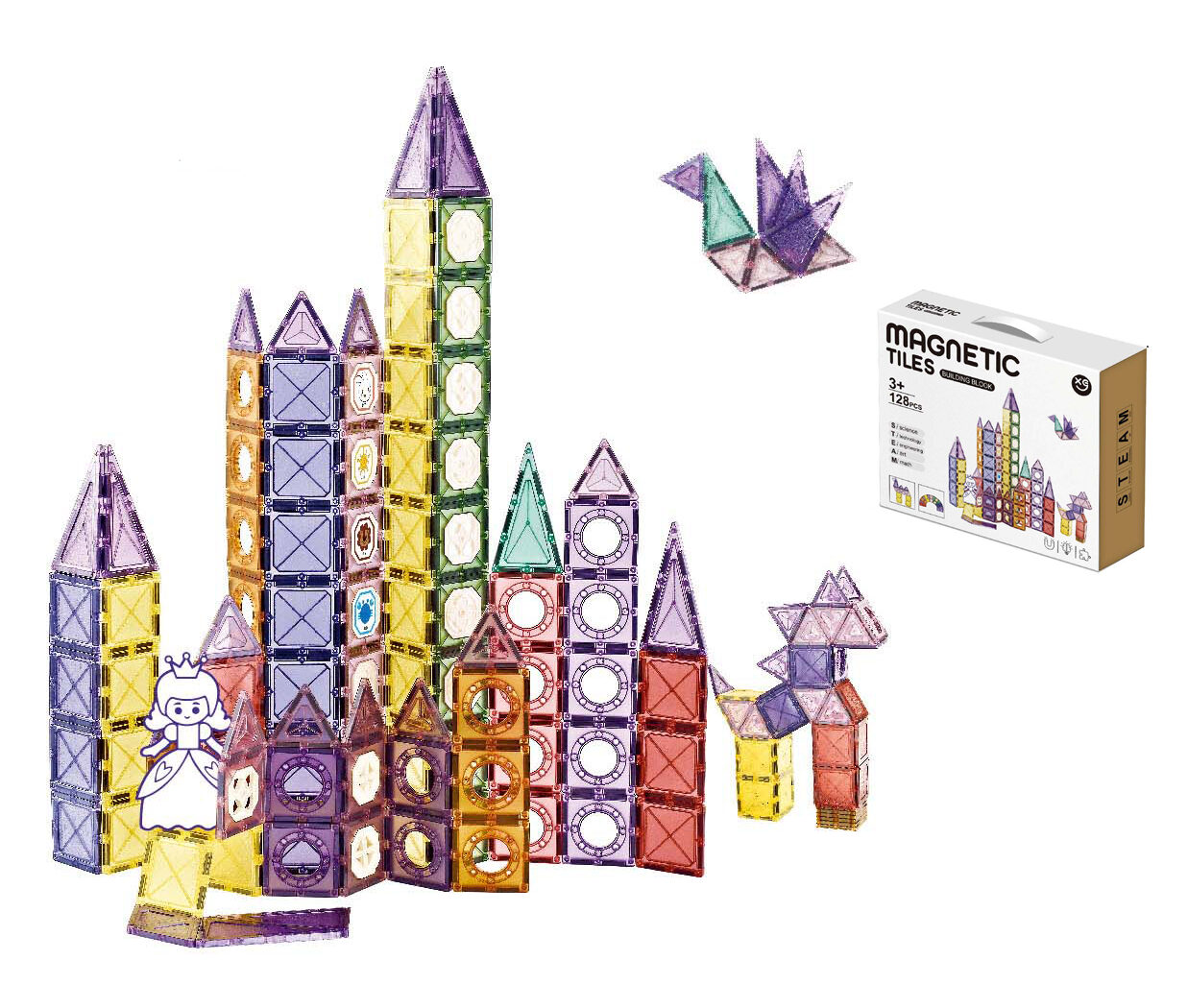
2. Castle Magnetic Building Tiles
Castle products have strong gift appeal. They are easy to understand from the front of the package, and they work well for role play.
A castle-themed range may include:
- Towers.
- Drawbridges.
- Walls.
- Flags.
- Gates.
- Small figures or story accessories.
- Royal rooms and treasure areas.
The product can support both construction and imaginative play. Children can build a castle, create a rescue story, defend the gate, or redesign the structure after it falls.
From a STEM perspective, castle building introduces practical ideas such as:
- Balance.
- Symmetry.
- Stability.
- Weight distribution.
- Structural design.
- Planning and rebuilding.
This is useful for retailers that want products to sit between traditional toys and educational toys.
Castle products also perform well as birthday gifts because the theme is immediately visible. A well-designed package can show three or four different models, helping parents understand that the set offers more than one play session.
3. Space Magnetic Building Tiles
Space is a strong theme for STEM positioning. It naturally connects construction play with science, exploration, technology, and problem-solving.
A space set could include:
- Rockets.
- Space stations.
- Lunar bases.
- Satellites.
- Astronaut vehicles.
- Planet models.
- Launch platforms.
A child might begin by building a rocket. Then the play may develop into a complete mission: constructing a launch area, designing a space station, and creating a vehicle for exploring another planet.
This gives retailers a useful marketing message:
Build the mission. Explore the unknown. Learn through play.
Space products are also suitable for older children than basic preschool magnetic tiles. A more advanced set can use more components, additional structural parts, and challenge cards.
For example:
- Build a tower that can support a launch vehicle.
- Design a space station with connected sections.
- Create a vehicle for a rough planetary surface.
- Build a landing platform that remains stable.
- Construct a satellite with rotating parts.
These activities make the product feel more like an engineering kit while still being accessible to children.
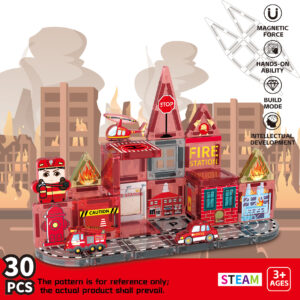
4. Fire Rescue Magnetic Building Tiles
Fire rescue is a practical, action-based theme. Children recognize fire trucks, rescue stations, ladders, and emergency missions from everyday life and media.
A set could include:
- Fire stations.
- Fire trucks.
- Rescue towers.
- Garages.
- Ladders.
- Water tanks.
- Emergency signs.
This theme works particularly well for role play and cooperative play. One child can build the station, another can create the rescue scene, and a third can plan the route for the vehicle.
The product can also introduce real-world ideas:
- Community helpers.
- Emergency response.
- Teamwork.
- Safety awareness.
- Vehicle design.
- Building access and pathways.
For retailers, fire rescue products can be positioned as educational pretend play with construction value. That gives them broader appeal than a standard vehicle toy.
The design should be careful, clear, and age-appropriate. Packaging should show the main components, the recommended age, and the types of models children can build.
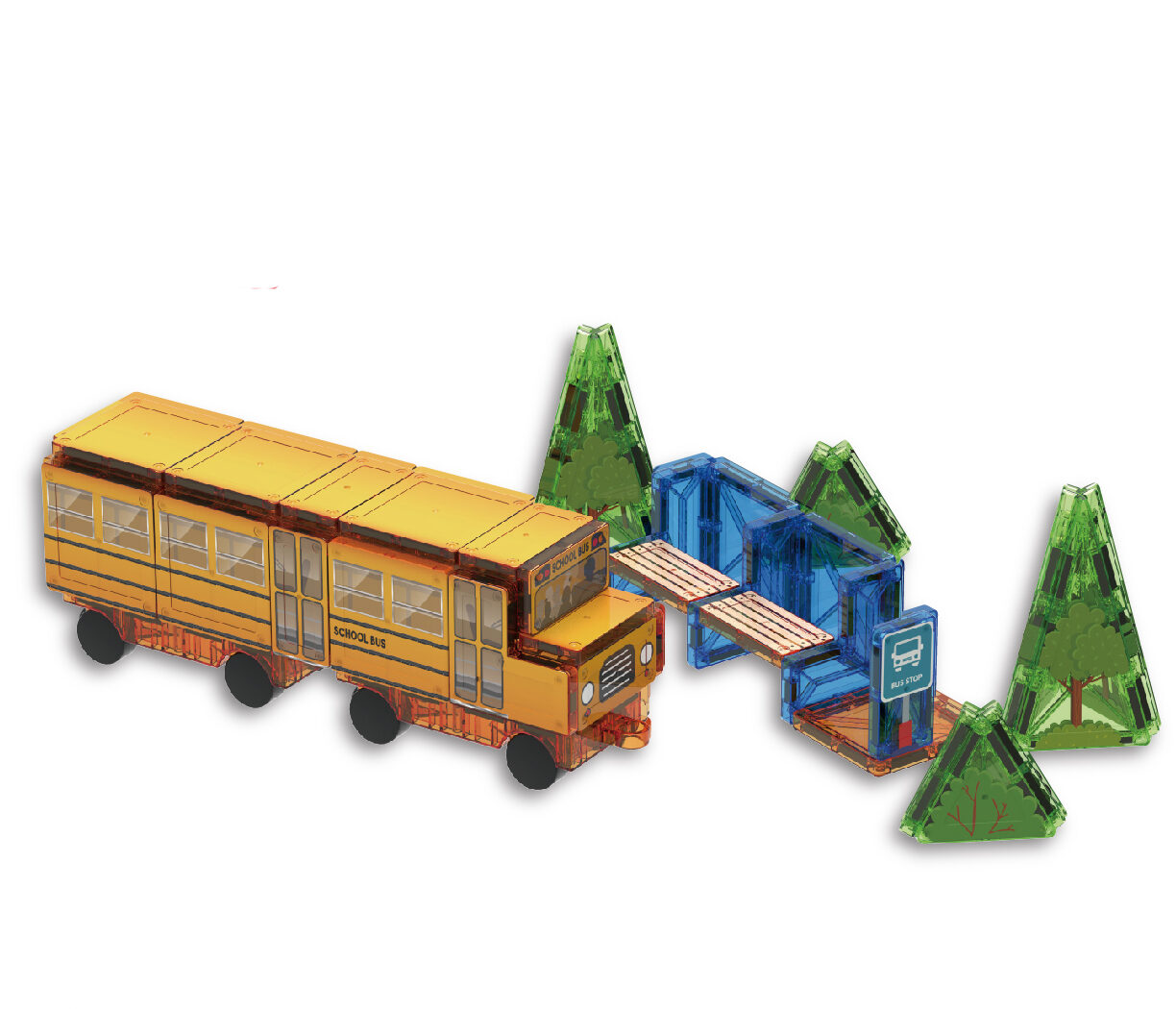
5. Engineering Magnetic Building Tiles
Engineering sets may be the strongest choice for STEM-focused brands, schools, and educational distributors.
These products can focus on:
- Bridges.
- Cranes.
- Towers.
- Vehicles.
- Machines.
- Construction sites.
- Roads and tunnels.
The key is to offer a challenge rather than only a finished model.
For example, a challenge card could ask:
- Can you build a bridge that holds three toy cars?
- Can you make a tower taller without making it fall?
- Can you connect two buildings with a stable walkway?
- Can you design a vehicle that can move through a tunnel?
- Can you build a crane that can lift a lightweight object?
This turns magnetic building tiles into a repeat-use learning tool. The child is not simply following instructions. The child is making a plan, testing it, seeing what happens, and trying again.
That kind of hands-on problem-solving is attractive to STEM retailers and educational buyers.
Why Buyers Prefer Themed Product Families
A complete themed product family gives buyers several commercial advantages.
Easier shelf organization
Retailers can group products by theme, age, or difficulty. This makes the category easier for customers to shop.
Clearer online merchandising
On e-commerce platforms, a themed product usually needs less explanation. A customer searching for a space toy or fire station toy can understand the product quickly.
Better cross-selling
A customer who buys a basic castle set may later purchase a castle expansion pack, character pack, or bridge pack.
Stronger seasonal marketing
Space products can be promoted around science events. Castle products work well for birthdays and holidays. Animal products can be connected to early learning and nature education.
Better private-label potential
A retailer can request exclusive colors, packaging, accessories, or story cards without redesigning the entire construction system.
What B2B Buyers Should Check Before Ordering
Themed design is important, but it is only one part of a successful product.
Buyers should also evaluate:
- Magnet security and durability.
- Product age grading.
- Mechanical and physical safety.
- Material and chemical testing.
- Clear warning labels.
- Packaging quality.
- Instruction clarity.
- Replacement part availability.
- Factory quality control.
- MOQ and lead time.
- Private-label flexibility.
- Retail and e-commerce support materials.
For the United States, buyers should ask about applicable toy safety requirements, including ASTM F963 and CPSIA documentation. For Europe, buyers should confirm the appropriate CE documentation and EN 71 testing for the specific SKU. Magnetic toys require particular attention because magnets must not become accessible during normal or reasonably foreseeable use. Recent U.S. and European safety alerts show that this is not an area where buyers can rely on appearance alone.cpsc+2
It is also worth checking whether the supplier is preparing for updated European toy safety expectations. The EU Toy Safety Regulation entered into force in 2026, with a longer transition period before full application, while updated EN 71 standards are also being introduced.eurofins+1
How Lione Toys Can Support Your Product Range
At Lione Toys, we focus on magnetic building blocks, educational toys, and construction-based play products for international B2B customers.
Our product development approach can support:
- Animal-themed magnetic building tiles.
- Castle and fantasy construction sets.
- Space and STEM exploration sets.
- Fire rescue and community helper themes.
- Engineering and building challenge sets.
- Mixed-size construction systems.
- Private-label packaging.
- Product customization.
- English product materials.
- Export documentation and quality coordination.
The goal is not simply to supply another box of magnetic tiles. The goal is to help buyers create a product range that children understand, parents trust, and retailers can merchandise easily.
You can explore more product ideas and discuss your next collection at www.lionetoys.com.
FAQ
Are themed magnetic building tiles suitable for educational retailers?
Yes. Animal, space, and engineering themes can support learning activities related to science, design, problem-solving, and communication. For educational channels, challenge cards and teacher activity guides can make the product more useful.
What age group is best for magnetic building tiles?
The correct age depends on the components, magnet design, product complexity, and safety testing. Many products are developed for ages 3+, while more complex engineering sets may be designed for older children. The final age grading should be based on product evaluation and applicable market requirements.
Can buyers request private-label packaging?
Many B2B suppliers support custom packaging, colors, printed materials, and selected components. Buyers should confirm MOQ, artwork requirements, sample approval, and production lead time before placing an order.
Which theme is easiest to sell?
Animal and castle themes are often easy for younger children and gift buyers to understand. Space and engineering themes may be especially attractive to STEM-focused retailers. The best choice depends on the retailer’s customer base and price positioning.
What safety documents should buyers request?
Buyers should request test reports and technical documents that match the exact product, materials, colors, and intended market. Depending on the destination, this may include ASTM F963, CPSIA-related documentation, CE documentation, EN 71 testing, REACH-related information, and magnet safety evaluation.