

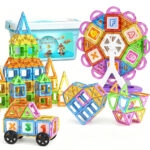
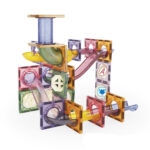
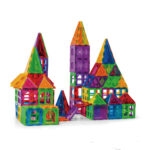
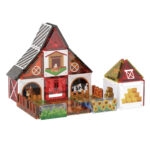

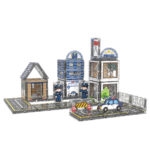
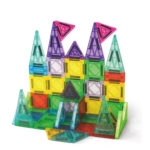
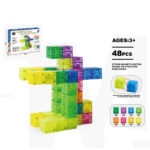
The real cost of importing magnetic building blocks from China is not the unit price shown on a factory quotation. It is the landed cost: the total amount required to bring compliant, sale-ready products from the factory to your warehouse.
For toy importers, distributors, retailers, Amazon sellers, and private-label brands, a low factory price can be misleading if it excludes customized packaging, product testing, domestic trucking, international freight, customs duties, inspection charges, and local delivery.
A better purchasing decision starts with one question:
What will each sellable magnetic building block set actually cost after it arrives at my warehouse?
This guide explains how to calculate the real cost of importing magnetic building blocks from China, which expenses buyers often overlook, and how to compare factory quotations accurately.
What Is Landed Cost?
Landed cost is the total cost of purchasing, transporting, clearing, receiving, and preparing a product for sale in your destination market.
For magnetic tiles, magnetic sticks, magnetic building blocks, and other educational toys, the landed-cost calculation usually includes:
Landed Cost=Factory Product Cost+Packaging Cost+Testing Cost+Tooling Cost+China Local Charges+International Freight+Import Duty and Taxes+Customs and Broker Fees+Inspection Cost+Destination Delivery+Other Selling-Ready Costs
Then calculate your per-unit landed cost:
Landed Cost per Set=Total Sellable SetsTotal Landed Cost
The phrase “sellable sets” is important. If your shipment contains damaged cartons, inspection rejects, missing pieces, or products reserved for samples and marketing, those units should not be treated as normal saleable inventory.
Factory Price: Start With the Right Quote
The factory price is the starting point, but buyers must first understand which trade term applies. An EXW price, FOB price, CIF price, and DDP price do not include the same costs or responsibilities.
Incoterms are internationally recognized trade terms that clarify the allocation of tasks, costs, and risks between the buyer and seller.trade+1
| Quotation Term | What It Usually Means | Buyer Must Check |
|---|---|---|
| EXW | Product is made available at the factory | China trucking, export handling, customs process, freight, import clearance, taxes, and delivery |
| FOB | Supplier delivers goods loaded on board at the named port of departure | International freight, insurance, destination charges, customs clearance, duties, taxes, and warehouse delivery |
| CFR | Seller arranges ocean freight to the named destination port | Destination port charges, customs clearance, duties, taxes, and final delivery |
| CIF | Seller arranges ocean freight and insurance to the named destination port | Destination charges, customs clearance, duties, taxes, and final delivery |
| DDP | Seller arranges delivery with duties paid, subject to agreed terms | Confirm importer-of-record status, customs process, included charges, and final delivery scope |
For most established importers sourcing magnetic building blocks from China, FOB is a common structure because it gives the buyer more control over the freight forwarder, sailing schedule, insurance, and destination charges.
However, no Incoterm automatically makes an offer “better.” The key is to compare quotations on the same basis.
For example, do not compare:
- Supplier A: USD 4.80 EXW per set
- Supplier B: USD 5.20 FOB per set
Supplier B may actually be lower-cost after China trucking, export documentation, terminal handling, and port charges are added to Supplier A’s EXW price.
Product Cost: More Than Piece Count
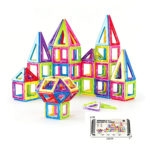
The factory product price should cover the approved magnetic building block specification. But “100 PCS magnetic tiles” is not enough detail for an accurate quotation.
The unit price can change based on:
- Number of pieces in each set
- Mix of standard and special tile shapes
- Number of magnets per tile
- Magnet strength, size, and grade
- ABS material quality
- Tile thickness
- Ultrasonic welding standard
- Printed tiles, such as roads, doors, animals, letters, or numbers
- Themed accessories, including figures, cars, dinosaurs, animals, wheels, or ball-run components
- Storage bags, base plates, or instruction books
- Production quantity
- Product quality requirements
- Inspection standards
A 100-piece basic magnetic tile set and a 100-piece dinosaur magnetic building set may have the same total piece count but very different production costs.
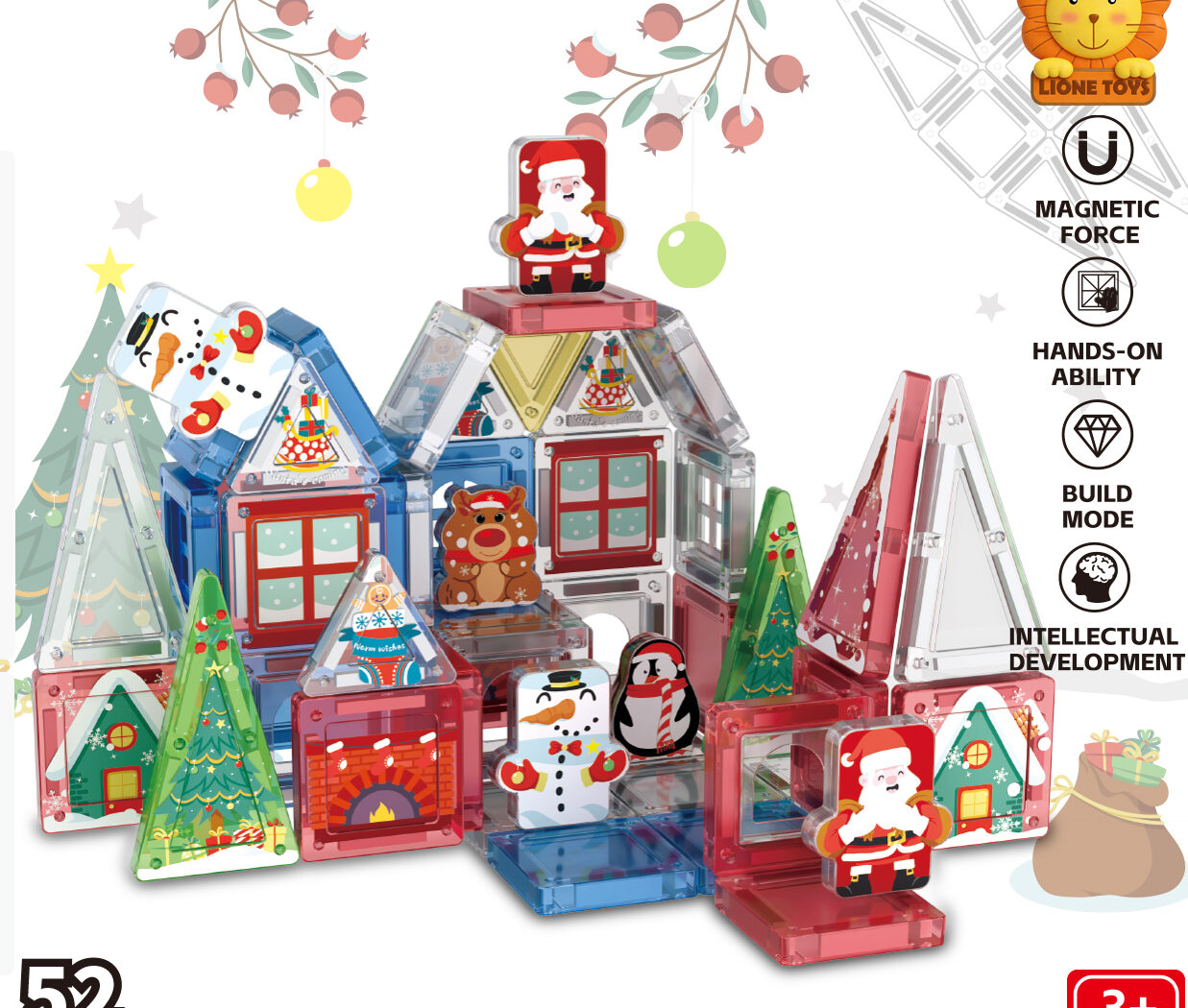
The dinosaur set may include printed tiles, animal figures, themed accessories, a more complex instruction manual, a larger retail box, and extra packing protection. These features can improve retail value, but they also affect the final landed cost.
Ask the factory for a clear component list and ensure the quotation matches the exact approved specification.
Packaging Cost: A Major Part of Product Cost
Packaging is frequently underestimated when importing toys. It affects not only your factory quotation but also container utilization, warehouse storage, e-commerce fulfillment, product presentation, and return risk.
For magnetic building blocks, packaging costs may include:
- Standard color box
- Custom color box
- Product insert or paper tray
- Plastic tray or molded inner tray
- EVA or foam protection
- Carrying case
- Storage bag
- Instruction manual
- Activity cards
- Warning labels
- Barcode labels
- Polybag or shrink-wrap protection
- Inner carton
- Master export carton
- Carton markings
- Pallet wrapping or palletization
A simple color box may be enough for a low-to-mid-range product. A premium gift set may need a stronger box, a molded tray, a larger manual, and more protection for figures or accessories.
The packaging question is not only “How much does the box cost?” It is also:
How much additional freight does this box create?
An oversized box can significantly increase ocean freight, air freight, fulfillment cost, warehouse space requirements, and retailer shipping charges.
Before final approval, ask your supplier for:
- Retail-box dimensions
- Product net weight
- Gross weight per unit
- Units per master carton
- Master-carton dimensions
- Master-carton gross weight
- Total shipment cubic meters
- Estimated 20-foot and 40-foot container loading quantity
- Pallet size and loading details, if required
Testing and Compliance Cost
Magnetic building blocks are children’s products, so testing and compliance must be included in your import budget.
The exact requirements depend on your destination market, age grade, product components, materials, retail channel, and applicable local regulations.
For the United States, toys intended primarily for children aged 12 and under generally require third-party testing by a CPSC-accepted laboratory and certification through a Children’s Product Certificate. Buyers should verify which ASTM F963 requirements apply to the specific magnetic tile or magnetic-stick product, including magnet-related requirements where relevant.cbp+1
For the European Union, toy manufacturers must ensure that toys meet essential safety requirements before placing them on the market, and CE marking is part of the compliance framework.europa+1
Testing-related costs can include:
- Mechanical and physical testing
- Small-parts assessment
- Magnet-related testing
- Flammability testing, where applicable
- Chemical testing
- Heavy-metal and restricted-substance testing
- Material testing for plastics, inks, coatings, and accessories
- Packaging or labeling review
- Product age-grading evaluation
- Updated testing after material, color, accessory, or design changes
Testing cost may be charged in different ways:
- The supplier already has a valid report for the exact stock SKU
- The supplier shares the cost with the buyer
- The buyer pays for a new report
- The buyer pays only for product differences or additional test items
- The test cost is included in the unit price
- The test cost is paid as a separate one-time project fee
Always ask whether a report applies to your exact product. A factory report for a basic 60-piece set may not automatically cover a customized set with printed tiles, a new color, figures, wheels, or additional small accessories.
Tooling and Mold Cost
Not every magnetic building block order requires new molds. If you choose an existing product configuration and customize only the packaging, logo, instructions, or color mix, tooling cost may be zero.
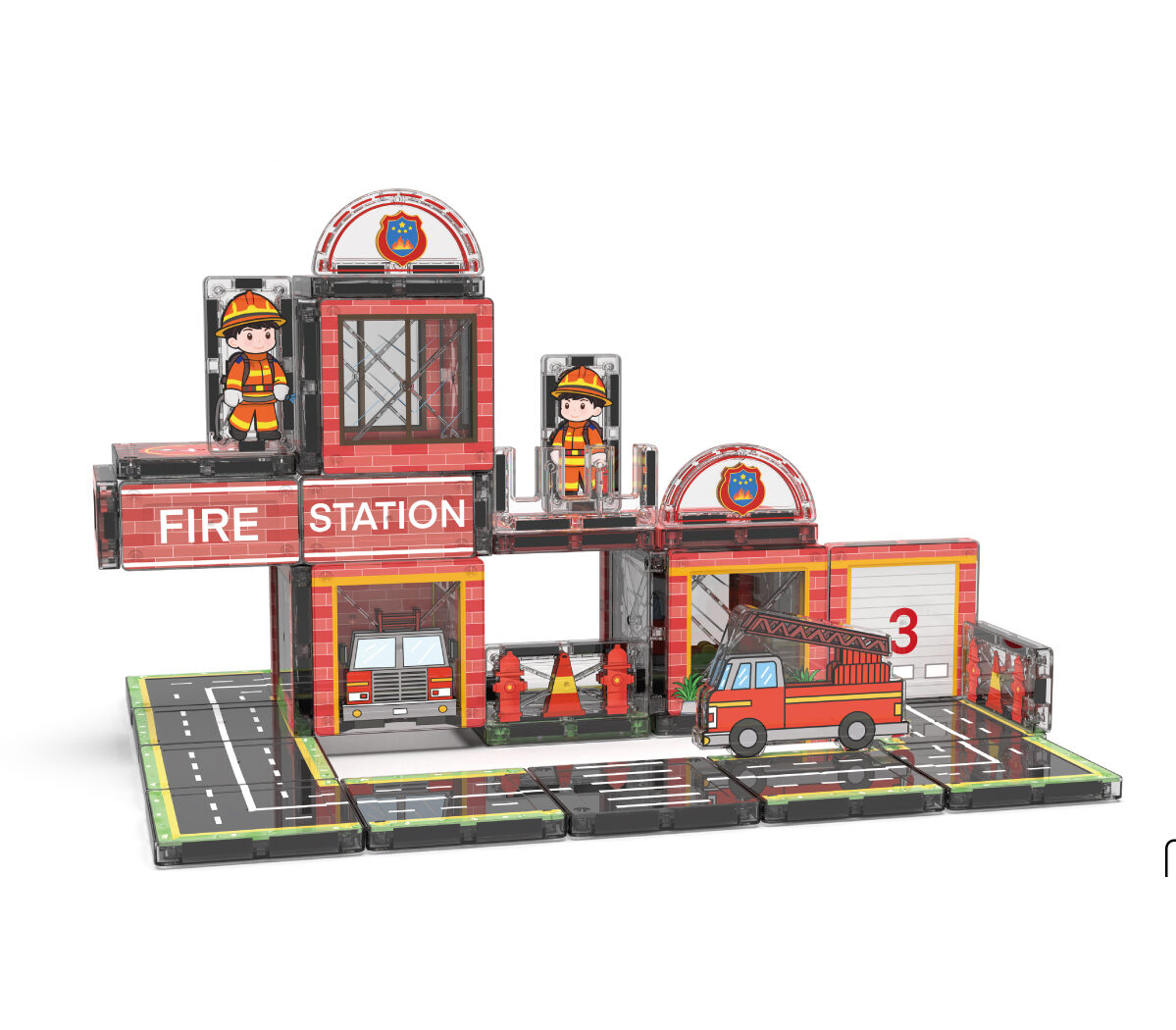
However, if you want a new shape, custom accessory, special figure, exclusive road tile, unique vehicle base, or original magnetic component, you may need to budget for mold development.
Tooling costs may include:
- Product design
- 3D modeling
- Prototype development
- Mold engineering
- Injection-mold tooling
- Trial production
- Sample revisions
- Mold testing
- Mold maintenance
- New product safety testing
A one-time mold cost should not be ignored when calculating the first-order landed cost. But it should also not be treated as a permanent cost if the mold will be used for future orders.
Use two calculations:
First-Order Landed Cost per Set=First-Order Sellable SetsAll First-Order Costs Including Tooling
Repeat-Order Landed Cost per Set=Repeat-Order Sellable SetsRepeat Product and Logistics Costs
This distinction helps buyers understand the real investment needed to launch a private-label magnetic toy range.
Before paying for molds, confirm:
- Who owns the molds
- Whether molds are exclusive
- Whether the supplier can sell the design to other buyers
- Expected mold lead time
- Mold maintenance responsibility
- Revision cost if the sample needs changes
- Storage terms if you do not place repeat orders
- Whether the product design can be protected in your market
China Domestic Charges
When buyers see an EXW factory price, they often forget the cost of moving goods from the factory to the export port.
China-side charges may include:
- Trucking from the factory to the export port
- Warehouse receiving
- Container loading
- Export declaration
- Customs documentation
- Terminal handling
- Port handling
- Bill of lading documentation
- Freight-forwarder handling
- Cargo insurance
- Inspection coordination
- Palletization or fumigation when applicable
For magnetic building blocks made in Chenghai, China, the domestic transportation cost may differ depending on the port of departure, shipment size, container availability, and whether cargo is consolidated with other products.
If you buy on an FOB basis, clarify exactly which China-side charges are included. The named port should be stated clearly, such as “FOB Shantou,” “FOB Shenzhen,” or another agreed port.
If you buy EXW, request a complete estimate from your freight forwarder before confirming the order. An apparently low EXW factory price can become less attractive after adding local transport and export handling.
International Freight Cost
International freight can have a large effect on the landed cost of magnetic building blocks because toys are often volume-sensitive products. Retail boxes, inner trays, master cartons, and gift packaging can take up substantial space.
Main freight options include:
- Express courier for samples or urgent small shipments
- Air freight for urgent replenishment
- Sea freight by less-than-container load, or LCL
- Sea freight by full-container load, or FCL
- Rail freight on applicable trade routes
- Multimodal freight, depending on destination
The best method depends on your order size, selling season, destination, cash flow, and urgency.
| Freight Method | Best For | Main Advantage | Main Limitation |
|---|---|---|---|
| Express courier | Samples and small urgent parcels | Fastest delivery | Highest cost per unit |
| Air freight | Urgent replenishment and high-margin items | Fast transit | Expensive for bulky toys |
| LCL sea freight | Smaller commercial orders | No need to fill a container | Higher handling cost per cubic meter |
| FCL sea freight | Larger orders | Usually lower freight cost per unit | Requires higher inventory commitment |
| Rail or multimodal | Certain destinations and transit needs | Can balance transit time and cost | Availability varies by lane |
When comparing freight offers, confirm whether the quote includes:
- Origin charges
- International freight
- Fuel and peak-season surcharges
- Insurance
- Destination terminal charges
- Documentation fees
- Customs clearance
- Delivery appointment fees
- Final warehouse delivery
- Pallet exchange or unloading charges
- Any DDP-related administrative charges
Ask your forwarder for an all-in estimate with a clear list of exclusions. This reduces the risk of unexpected invoices after the shipment has arrived.
Import Duties, Taxes, and Customs Fees
Import duties and taxes are not the same as freight. They are destination-market charges that depend on the product’s tariff classification, customs value, country of origin, trade measures, and local tax rules.
In the United States, the importer is ultimately responsible for paying any duty owed. U.S. Customs and Border Protection also notes that importers may face additional charges such as the Merchandise Processing Fee and customs-broker fees.cbp
For U.S. formal entries, CBP states that the Merchandise Processing Fee is assessed at 0.3464 percent ad valorem, subject to a stated minimum and maximum; ocean imports may also be subject to a Harbor Maintenance Fee of 0.125 percent of commercial cargo value.help.cbp+1
The exact duty rate and any additional tariff measures should be confirmed by a customs broker or qualified trade adviser using the correct Harmonized Tariff Schedule classification. Do not estimate duties from a competitor’s product listing or assume that all toys have the same rate.
Your customs and tax budget may include:
- Customs duty
- Additional tariffs or trade-remedy duties, where applicable
- Value-added tax or goods-and-services tax
- Merchandise Processing Fee
- Harbor Maintenance Fee for applicable ocean imports
- Customs bond
- Customs broker fee
- Entry filing fee
- Examination or inspection fees, if selected by customs
- Port storage or demurrage if clearance is delayed
- Local customs-related charges
Customs value is generally based on the price paid or payable for the goods exported to the United States, excluding U.S. import duties, freight, insurance, and other charges incurred in bringing the goods to the United States. However, customs valuation and duty assessment are technical subjects. Importers should work with qualified professionals for their specific product and transaction.census
Inspection and Quality-Control Cost
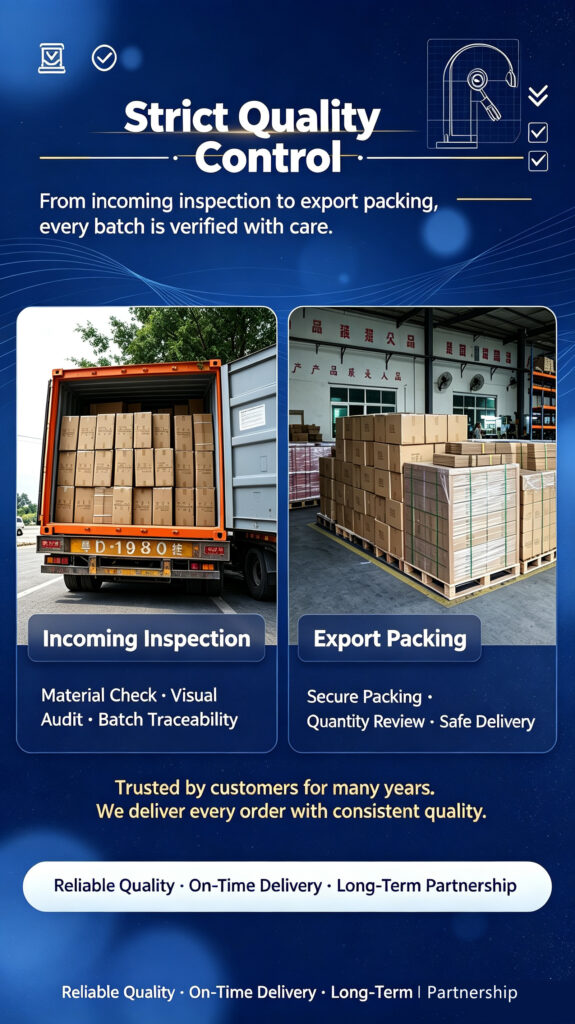
A pre-shipment inspection is not mandatory for every purchase order, but it can be a valuable risk-control expense—especially for a new supplier, a first private-label order, a customized product, or a high-value shipment.
Inspection-related costs may include:
- Pre-production inspection
- During-production inspection
- Pre-shipment inspection
- Container-loading supervision
- Factory audit
- Laboratory retesting
- Product performance tests
- Piece-count verification
- Packaging and carton-drop assessment
- AQL-based quality inspection
For magnetic building blocks, inspectors can check:
- Tile piece count
- Magnet connection performance
- Tile seams and ultrasonic welding
- Cracks, scratches, sharp edges, and color defects
- Printed-tile quality
- Accessory fit and function
- Packaging condition
- Barcode placement
- Warning labels
- Instruction manual accuracy
- Carton strength
- Shipping marks
- Random sampling according to your inspection plan
The cost of inspection should be viewed against the potential cost of receiving a shipment with wrong packaging, missing components, weak magnets, incorrect colors, or damaged cartons.
A small inspection cost can protect a much larger inventory investment.
Destination Charges and Warehouse Delivery
After the shipment reaches the destination port or airport, there are still costs before the goods become usable inventory.
Destination costs may include:
- Port or terminal handling
- Customs clearance
- Broker fees
- Cargo examination or hold fees
- Storage fees
- Container pickup
- Chassis fees
- Drayage
- Warehouse delivery
- Delivery appointment fees
- Unloading labor
- Palletization
- Warehouse receiving
- Inventory labeling
- Fulfillment-center preparation
- Product photography or listing preparation
E-commerce sellers should also include any marketplace preparation costs, such as FBA labeling, carton labeling, polybagging, bundling, and storage charges.
Retail suppliers may need to budget for retailer-compliance requirements, including carton labels, routing-guide requirements, pallet standards, ASN preparation, EDI charges, chargeback risk, and delivery appointments.
The product is not truly ready to sell until it has passed customs, arrived at the warehouse, been checked in, and met the labeling and packaging requirements of your sales channel.
Other Costs Buyers Often Miss
The following costs may not appear on the original factory quote, but they can affect profitability:
- Sample fees and courier freight
- Product photography
- Video production
- Translation of packaging and instructions
- Graphic-design costs
- Barcode registration
- Trademark registration
- Product liability insurance
- Marketplace listing fees
- E-commerce fulfillment fees
- Storage costs
- Promotional discounts
- Retailer chargebacks
- Product returns
- Spare-parts support
- Currency-conversion fees
- Bank-transfer fees
- Cargo insurance
- Financing costs
- Delayed-shipment cost
- Rework or relabeling cost
For a first import order, it is wise to create a contingency line in your budget. A contingency does not mean expecting failure; it means recognizing that international sourcing includes variables such as freight changes, customs delays, packaging corrections, and unforeseen handling costs.
Worked Example: Importing Magnetic Tiles From China
The following is an illustrative example only. It is not a live factory quotation, freight quote, duty determination, or tax calculation.
Assume a buyer imports 2,000 sets of an 80-piece magnetic tile set from China.
Product Assumptions
- Product: 80-piece magnetic tile set
- Quantity: 2,000 sets
- Factory price: USD 5.20 per set FOB
- Total product cost: USD 10,400
- Custom color-box upgrade: USD 0.35 per set
- Total packaging upgrade: USD 700
- Product-testing contribution: USD 1,200
- Pre-shipment inspection: USD 350
- Ocean freight and destination shipping charges: USD 2,600
- Customs duty and import-related fees: USD 1,100
- Customs broker and clearance fees: USD 300
- Local warehouse delivery: USD 450
- Contingency for minor costs: USD 400
Total-Landed-Cost Calculation
| Cost Item | Calculation | Total Cost |
|---|---|---|
| Factory product cost | 2,000 × USD 5.20 | USD 10,400 |
| Custom packaging upgrade | 2,000 × USD 0.35 | USD 700 |
| Testing contribution | One-time | USD 1,200 |
| Pre-shipment inspection | One-time | USD 350 |
| Freight and destination shipping | Estimated shipment cost | USD 2,600 |
| Duty and import-related fees | Estimated | USD 1,100 |
| Customs broker and clearance | Estimated | USD 300 |
| Local warehouse delivery | Estimated | USD 450 |
| Contingency | Estimated | USD 400 |
| Total landed cost | USD 17,500 |
Landed Cost per Set=2,000USD 17,500=USD 8.75 per set
Although the quoted factory product price was USD 5.20 per set, the estimated real landed cost is USD 8.75 per set.
That is an increase of approximately 68 percent over the original FOB product price.
This does not mean importing is unprofitable. It means the buyer must set retail or wholesale pricing based on the true landed cost, rather than on the factory quote alone.
First Order Versus Repeat Order
First orders are normally more expensive because they may include one-time costs such as:
- New package artwork
- Packaging setup
- New product testing
- Sample and courier costs
- Product development
- Mold charges
- First-order inspection
- Product photography
- Listing preparation
Repeat orders can have a lower landed cost per unit because some of these expenses are no longer required.
Using the same example above, assume the buyer places a repeat order of 2,000 sets with no new testing contribution and no artwork setup costs.
| Cost Item | First Order | Repeat Order |
|---|---|---|
| Product cost | USD 10,400 | USD 10,400 |
| Custom packaging upgrade | USD 700 | USD 700 |
| Testing contribution | USD 1,200 | USD 0 |
| Pre-shipment inspection | USD 350 | USD 350 |
| Freight and destination shipping | USD 2,600 | USD 2,600 |
| Duty and import fees | USD 1,100 | USD 1,100 |
| Broker and clearance | USD 300 | USD 300 |
| Warehouse delivery | USD 450 | USD 450 |
| Contingency | USD 400 | USD 250 |
| Total cost | USD 17,500 | USD 16,150 |
| Landed cost per set | USD 8.75 | USD 8.08 |
The repeat-order landed cost falls from USD 8.75 to USD 8.08 per set in this example. If the buyer also increases order quantity, improves carton efficiency, or secures better freight pricing, the per-unit cost may decrease further.
How to Reduce Landed Cost Without Reducing Quality
The lowest-cost product is not always the best product. Weak magnets, thin plastic, poor welding, damaged packaging, or missing compliance documents can create returns and brand damage that are much more expensive than a slightly higher unit price.
Instead of reducing quality, focus on cost efficiency.
Improve Packaging Efficiency
Ask the manufacturer whether the retail box can be made more compact without reducing product protection. Smaller carton volume can lower freight and warehouse cost.
Select the Right Order Quantity
A larger order may reduce unit cost and freight cost per set, but it also increases inventory risk. Calculate the balance between unit economics and sales velocity.
Consolidate Shipments
If you are importing several compatible toy items from China, consolidation may reduce freight and handling costs. Ensure cartons are properly labeled and that your forwarder can manage consolidated cargo efficiently.
Use Standard Components Where Possible
Custom packaging, printed tiles, and themed combinations can create differentiation without requiring expensive new molds. Use existing parts where possible, especially for your first order.
Plan Testing Early
Confirm compliance requirements before product development and before production begins. Late testing changes can delay shipping or require expensive rework.
Compare Freight Quotes Properly
Request comparable freight quotations with clear inclusions and exclusions. A low ocean-freight number may hide high destination charges.
Use Pre-Shipment Inspection
Inspection adds cost, but it can prevent the much higher cost of importing nonconforming goods.
Track Every Order
Maintain a landed-cost spreadsheet for each SKU and each shipment. Record quoted cost, actual cost, freight variance, duty, broker fees, warehouse charges, and unexpected expenses. This data improves future negotiation and pricing decisions.
A Simple Landed-Cost Checklist
Before confirming a magnetic building block purchase order, make sure you have budgeted for every item below:
- Factory product price
- Product specification and component list
- Customized packaging
- Manuals, inserts, labels, and barcodes
- Sample cost and courier freight
- Compliance testing and documentation
- Tooling and mold charges, if applicable
- China domestic trucking and export charges
- Freight and cargo insurance
- Duty, taxes, and customs fees
- Customs broker and bond costs
- Pre-shipment inspection
- Destination handling and warehouse delivery
- Warehouse receiving and labeling
- Marketplace or retailer preparation
- Product insurance and return allowance
- Contingency budget
If any line is missing, your landed-cost calculation may be incomplete.
Build a Better Buying Decision
Importing magnetic building blocks from China can offer strong business opportunities, but profitability depends on accurate cost planning. The factory quotation is only the first number. The real decision should be based on product quality, compliance, packaging efficiency, logistics, duties, inspection, and the full landed cost at your warehouse.
A reliable supplier should help buyers understand product specifications, packaging options, carton details, production timing, sample requirements, and available compliance documentation. Your freight forwarder, customs broker, and local tax adviser should then help confirm shipping, duty, clearance, and destination costs.
For SEO, this page should link internally to related content such as:
- How Much Do Magnetic Tiles Cost Wholesale? A 2026 Buyer’s Guide
- How to Choose a Magnetic Building Blocks Manufacturer in China: 10 Questions to Ask
- Magnetic Tiles vs Magnetic Sticks: Which Product Should Toy Importers Choose?
- The Complete Guide to Themed Magnetic Building Tiles for Toy Buyers
Google emphasizes content created for people first, with a clear purpose and useful information for the intended audience. A practical landed-cost guide answers real buyer questions, supports purchasing decisions, and helps visitors move naturally toward a quotation request.developers.google
Request a Factory Quotation From Lione Toys
Lione Toys supports toy importers, distributors, retailers, e-commerce sellers, and private-label brands sourcing magnetic building blocks from China.
We can provide support with:
- Magnetic tile and magnetic stick product quotations
- Product piece lists and specifications
- ABS material and magnetic construction details
- Standard and customized packaging options
- OEM and ODM magnetic building block projects
- Sample preparation
- MOQ information
- Carton dimensions and loading details
- Product testing-document coordination
- Pre-shipment quality-control support
- Export packing and shipment coordination
Need a factory quotation? Contact Lione Toys for product pricing and MOQ information.
Visit www.lionetoys.com to request the latest magnetic building blocks catalog, discuss your target product, and receive a quotation based on your quantity, packaging needs, and destination market.